
Why Maserati's shift to Formula E is a win for both sides
Maserati will make a full-factory return to racing, joining the Formula E grid in 2023 with a view to electrifying its road car portfolio. In that regard it makes sense for Maserati - but it's also a win for the series as it seeks to rebound from losing three of its heavyweight German giants in the space of a few months

It’s been a long time since the famous Maserati name graced a single-seater world championship with its presence. Then, it competed in a world where hay-bales lined fast and dangerous circuits, captured on black-and-white film, as drivers diced against death for motor racing glory.
Some 62 years after the title-winning 250F was put out to pasture when Formula 1 introduced its 1.5-litre engine formula, Maserati has announced its return to the arena. Unlike its 1950s F1 counterparts in Ferrari and Alfa Romeo, the Modena manufacturer will instead join Formula E for the start of its Gen3 regulations, debuting in the 2022-23 season.
Following its absorption into the Stellantis umbrella, formed by a merger of Fiat Chrysler Automobiles and the PSA Group, Maserati had sought a return to the world of motorsport. Since departing F1 as a manufacturer entity at the end of 1957, the Trident’s appearance within racing has been sporadic at best, mostly underpinned by its efforts in sportscar racing. It supplied Cooper with F1 engines in the late 1960s, the combination winning two grands prix, but its greatest successes were with the MC12 supercar - a dominant presence in the FIA GT championship at the turn of the millennium in the hands of the pseudo-factory Vitaphone customer team.
PLUS: The unwanted GT car that changed sportscar racing forever
Stellantis, for its part, announced midway through 2021 that it held grand plans to invest heavily into electrification for its fleet of 14 brands, to the tune of €30bn through to 2025. Part of Maserati’s roadmap outlined by Stellantis is to offer electric versions of its full range of vehicles by 2025, starting with the MC20 sportscar. Thus, the marque has decided not to reignite its old rivalries with its Italian counterparts in F1, but instead develop new ones in Alejandro Agag's Formula E championship.
Maserati CEO Davide Grasso outlined the company’s repositioning and greater focus on electric vehicles as one of the key driving factors behind its decision to join FE, explaining that the all-electric championship was a “natural avenue” to restart its ambitions in the world of racing.
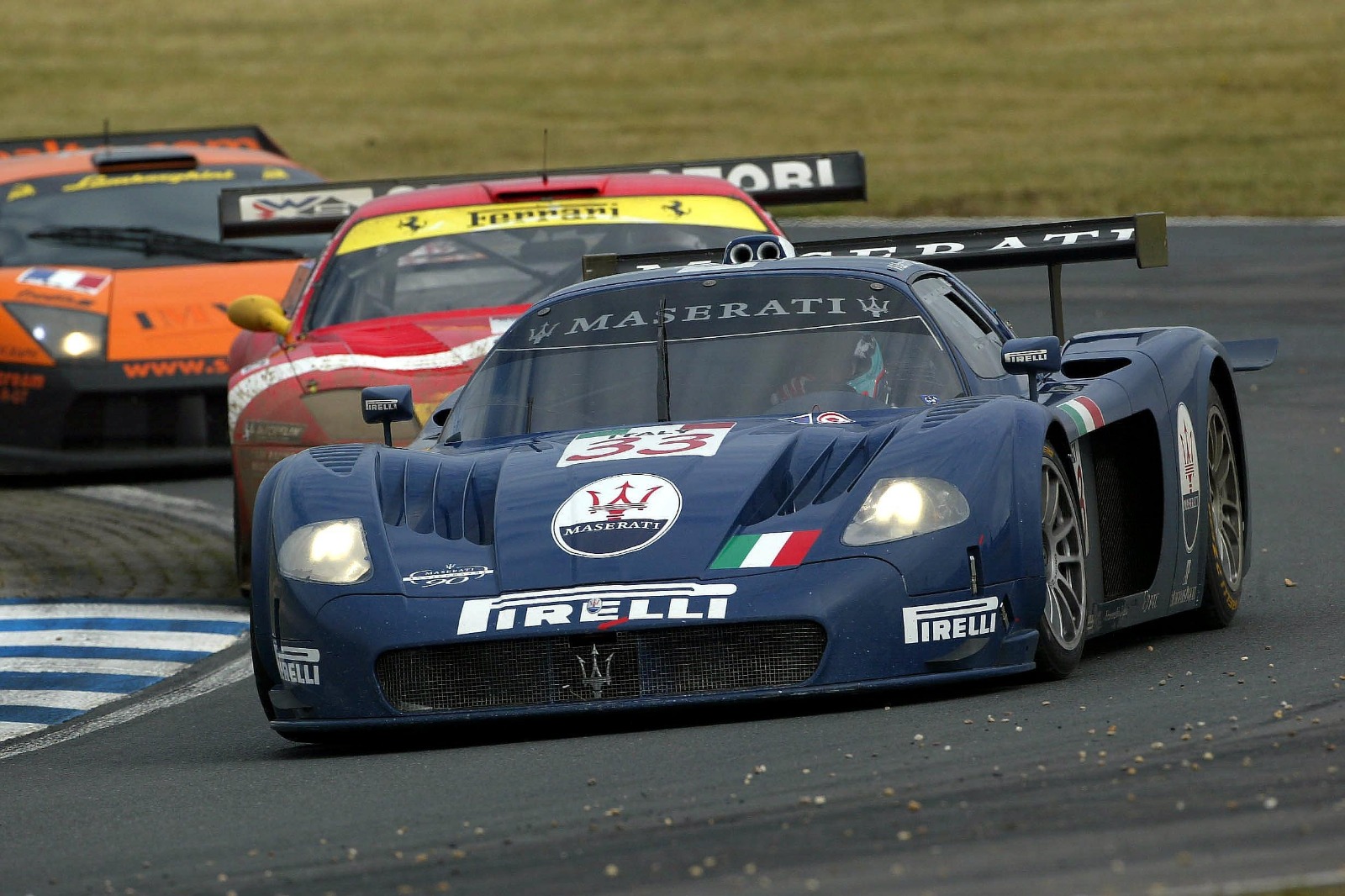
MC12 was a powerhouse in GT1 sportscar racing between 2004 and 2010, pictured here scoring its first win with Andrea Bertolini and Mika Salo at Oschersleben in 2004
Photo by: Motorsport Images
“We've been on the on the path to rebuild Maserati, to make Maserati to compete and win not only on the tracks, but also with the consumer in the streets for the last two and a half years,” Grasso said in a call with select media including Autosport.
“We've been working on this with Alejandro and his team for over about 12 months, because now we have the opportunity from a product standpoint and in a technology standpoint to have the right type of electrification strategy and product, not only materialising in Formula E, but also with the new products that we're going to be launching.
“Between now and 2025, all Maserati products are going to be coming with an electrified option. So we feel we're ready. The Formula E championship is raced in the city centres of the most iconic cities in the world, with a different take on competition which makes it very exciting for people to attend and watch the races. It was a very natural avenue for Maserati to start the first steps back into racing. We deliberately wanted to start with Formula E.”
Whomever Maserati decides to partner with, the relationship will thankfully not begin with the immediate pressure to win. Maserati has kept any expectations in check, explaining that it simply anticipates hard work to be competitive among the established teams on the grid
In its Formula E plan of attack, Maserati won’t stray too far from the formula that made Stellantis stablemate DS so successful with Techeetah. Instead of building an entirely new team from the ground up, Maserati will partner up with an existing team so that it can divert its full focus to its obligations as a manufacturer entity. Further to that, there is expected to be a modicum of cross-pollination in the powertrain hardware between DS and Maserati, although the extent of that is yet to be defined.
That said, Stellantis Motorsport’s senior vice president Jean-Marc Finot was keen to underline that DS and Maserati will function as two distinct and separate teams, with both given licence to fight for glory in the championship. Most of that will come from each teams’ individual progression in software, a key battleground in Formula E.
It is currently unknown who Maserati will partner with, given several suitors up and down the grid are yet to divulge their plans on sourcing a powertrain for the Gen3 regulations, which will have to yield 350kW in addition to a standard 250kW motor at the front. Venturi, Envision, Andretti, Dragon and the expected buyers of the Mercedes team are all currently available to operate the race team under the same capacity as Techeetah.
Whomever Maserati decides to partner with, the relationship will thankfully not begin with the immediate pressure to win. Promising the world and delivering nothing to that magnitude has proven to be the downfall of many larger companies in motorsport, even those who have been around the block. Maserati has kept any expectations in check, explaining that it simply anticipates hard work to be competitive among the established teams on the grid.

There is no shortage of potential partners for Maserati, with Venturi and Andretti among its options
Photo by: Sam Bagnall / Motorsport Images
“We expect to be prepared,” Grasso said. “We don't expect to win, we expect to work very, very hard, and to have a chance to compete and play our cards in order to be able to be winning. This is true for racing. This is true for our brand in general, in business.
“We work very, very hard to develop the right product, the right brand strategies to have the right team and to have the right marketplace, partners, and the right level of quality and performance and innovation that allows us to compete and win, whether it's on the tracks with Formula E or the heart of our consumers and fans. So our expectation is to be competitive.”
The announcement on the partner team, along with drivers, is expected to come in the next few weeks as Maserati fleshes out its plans further. The easy conclusion to draw is that, with Maserati being an Italian entity, Dragon’s Antonio Giovinazzi would be the first port of call. But that romanticised notion wholly depends on what Ferrari’s plans for the ex-Alfa Romeo F1 driver are, given it has its own Hypercar project set for launch in 2023.
Regardless, stepping into Formula E is a win for those within Maserati who wanted to sanction the brand’s return to racing. It aligns perfectly with its desire to increase its range of electric cars, reinvigorate a brand that has largely been overlooked in comparison to some of its larger stablemates, and gives the marque a chance to develop its electric powertrain products further in a motorsport environment.
Although Formula E does have limited lessons on offer for EV manufacturers, the changes to the championship in the future and the possibilities for growth will yield more developmental capabilities. Grasso explained that he sees Formula E as a “laboratory” for Maserati, and expects to see the innovations used within the championship trickle down into the road car division.
"This is not just a branding move,” Grasso stated. “It would be very respectable for anybody or any brand, but from our point of view it would be a little shallow. One of the reasons why we wanted to make this move, and one of the reasons why this is the right timing, is because we see Formula E as a laboratory for us to accelerate development into electrification.
“It’s no difference with what Formula 1 or the World Rally Championship or other types of competitions have meant for combustion engines in the past. One of the examples is actually very much related to our MC20 car, which has the Nettuno engine and has been a car in the last 10 years that has taken a Formula 1 type of technology, with a pre-combustion chamber, and taken into an engine which is used by a car that is driven in on the roads.

Maserati CEO Davide Grasso sees Formula E as a valuable testbed for the manufacturer
Photo by: Maserati
“So by the same token, we are looking at Formula E as a place which will enable and challenge us to accelerate the development of electrified type of technologies, to then bring some of those solutions to the cars that we are going to deliver to consumers to be driven on the roads, which will be the entire range that we have will be fully electrified by 2025.”
With Formula E thus attempting to rebuild the allure of the championship, managing to attract Maserati will have been a huge relief. Its illustrious history makes Maserati one of the most evocative names in racing
But just as Maserati needs Formula E to build its electric vehicle credentials, the brand’s entry is also a huge win for Formula E. It’s no secret that the championship’s organisers have struggled to keep its manufacturers interested in the series, largely in part due to the limited knowledge on offer from being involved.
Audi and BMW have both departed as manufacturer entities ahead of the upcoming eighth season of the championship, while Mercedes will duly depart at the end of the year ahead of the Gen3 regulations. The long-term involvement of Porsche is also in doubt, given its apparent interest in joining F1 as a power unit supplier from 2026.
With Formula E thus attempting to rebuild the allure of the championship, managing to attract Maserati will have been a huge relief. Its illustrious history makes Maserati one of the most evocative names in racing, one that has been sadly dormant for a considerable period of time. But just as Juan Manuel Fangio and Stirling Moss brought glory to Modena in the 1950s, Maserati’s reborn racing efforts will hope recapture those sepia-tinged memories in glorious technicolor.
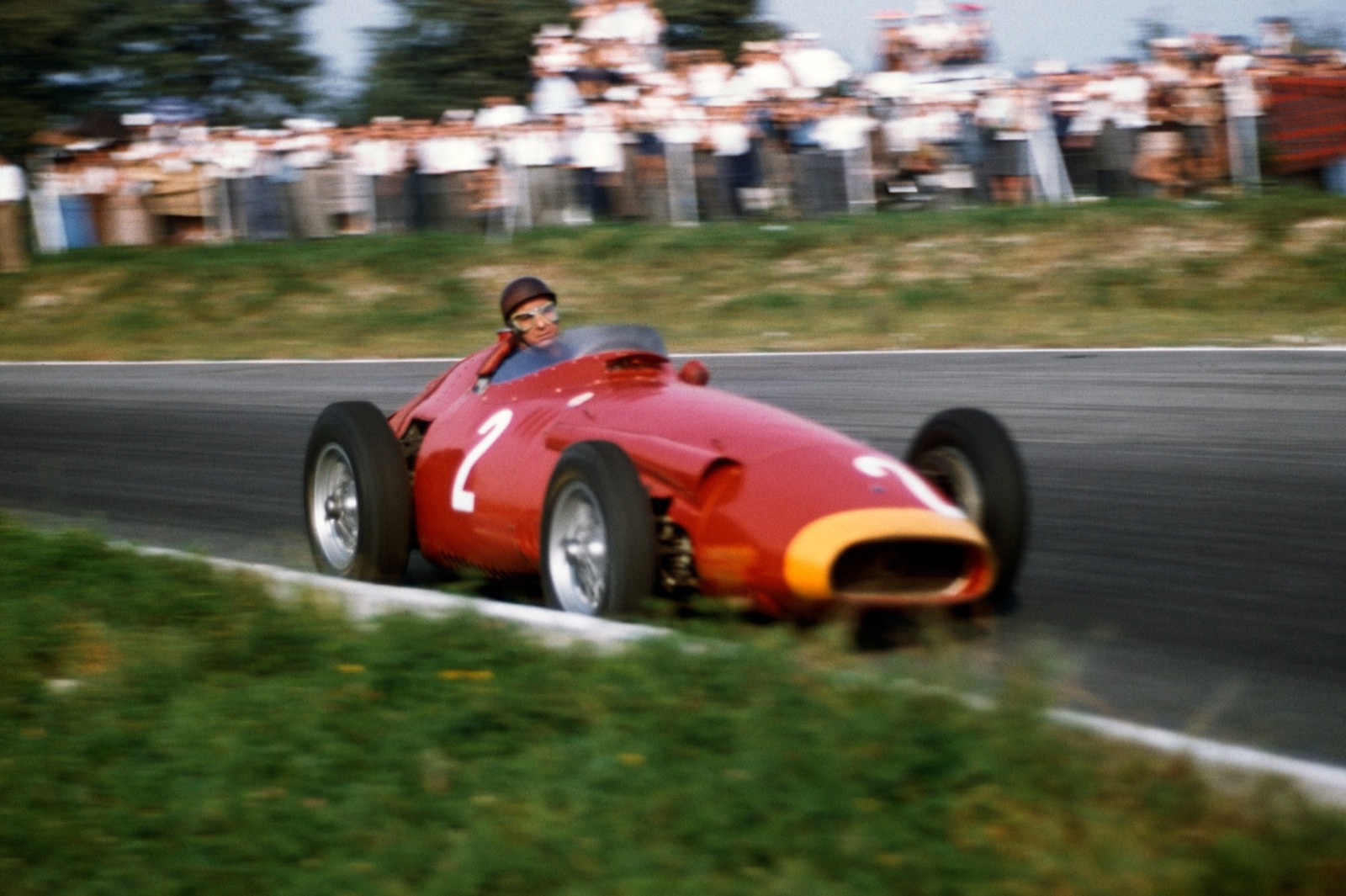
Can Maserati recapture its glory days of Fangio's 1957 world championship and give Formula E a timely boost simultaneously?
Photo by: Motorsport Images


Lights, Camara, action: How Haas picked F1's latest rookie for 2027

Horner's inside story of how Red Bull built its own F1 engine

Why Mercedes' latest 2026 F1 update is no downgrade

Singapore Grand Prix Driver Ratings 2026

What we learned from the 2026 F1 Singapore GP sprint race and qualifying

The political minefield set out by F1’s recent cost-cap grievances

What caused Mercedes' pace deficit at Sepang despite upgraded W17?

Three kings: F1's generational stars shone at Sepang

How the M8B became the most dominant car in McLaren’s history

What Verstappen knew about Red Bull’s big upgrade when he signed his new F1 deal

Colapinto urges fans to stop online abuse: “You’re not helping me or my future”

Evans given a hero's homecoming after WRC title triumph
Subscribe and access Autosport.com with your ad-blocker.
From Formula 1 to MotoGP we report straight from the paddock because we love our sport, just like you. In order to keep delivering our expert journalism, our website uses advertising. Still, we want to give you the opportunity to enjoy an ad-free and tracker-free website and to continue using your adblocker.


Top Comments