
The question marks resulting from national racing's rediscovered freedoms
OPINION: When government restrictions relaxed last month, so too did rules surrounding how club events operate, leading to a range of views on the best way forward. Beyond scrutineering, there's also the matter of in-person driver briefings and trainee marshal involvement to consider too

We have all become used to aspects of our lives changing over the past year and a half. But, now, as we take tentative steps towards normality amid the coronavirus pandemic’s unrelenting grip, some of the differences are becoming less stark. And the same is true in terms of national motorsport as well.
Following the much-hyped ‘Freedom Day’ last month, when the English government relaxed most of the remaining restrictions, there was also an easing of the rules from British motorsport governing body Motorsport UK. It had adopted a number of new protocols, particularly concerning signing-on and scrutineering, but also in other far wider aspects of event management to enable the sport to restart last July.
Now, from the end of this July, clubs have enjoyed greater freedom over how they operate their events once more. And it is fascinating to see the differing views and approaches on the COVID-compliant practices.
Take the issue of scrutineering. When the pandemic hit, the old ritual of every driver traipsing over to the scrutineering bay with their car at the start of the day was scrapped and random spot checks on up to 10% of entries and a pre-event online self-declaration introduced instead.
Now, it is up to clubs to decide how they want to tackle it. Some have instantly returned to the old routine and have every driver queuing up once again, but others have taken a more nuanced approach.
Giles Groombridge, the 750 Motor Club’s competitions manager, believes a return to scrutineering every car would be “a challenge given the number of scrutineers in the pool has decreased over the last 18 months and how jam-packed full all the race meetings are”. The club therefore fully scrutineers every car in just a few categories at each event in the morning – for example, at Anglesey last weekend it was 750 Formula, Historic 750 Formula and Locost.
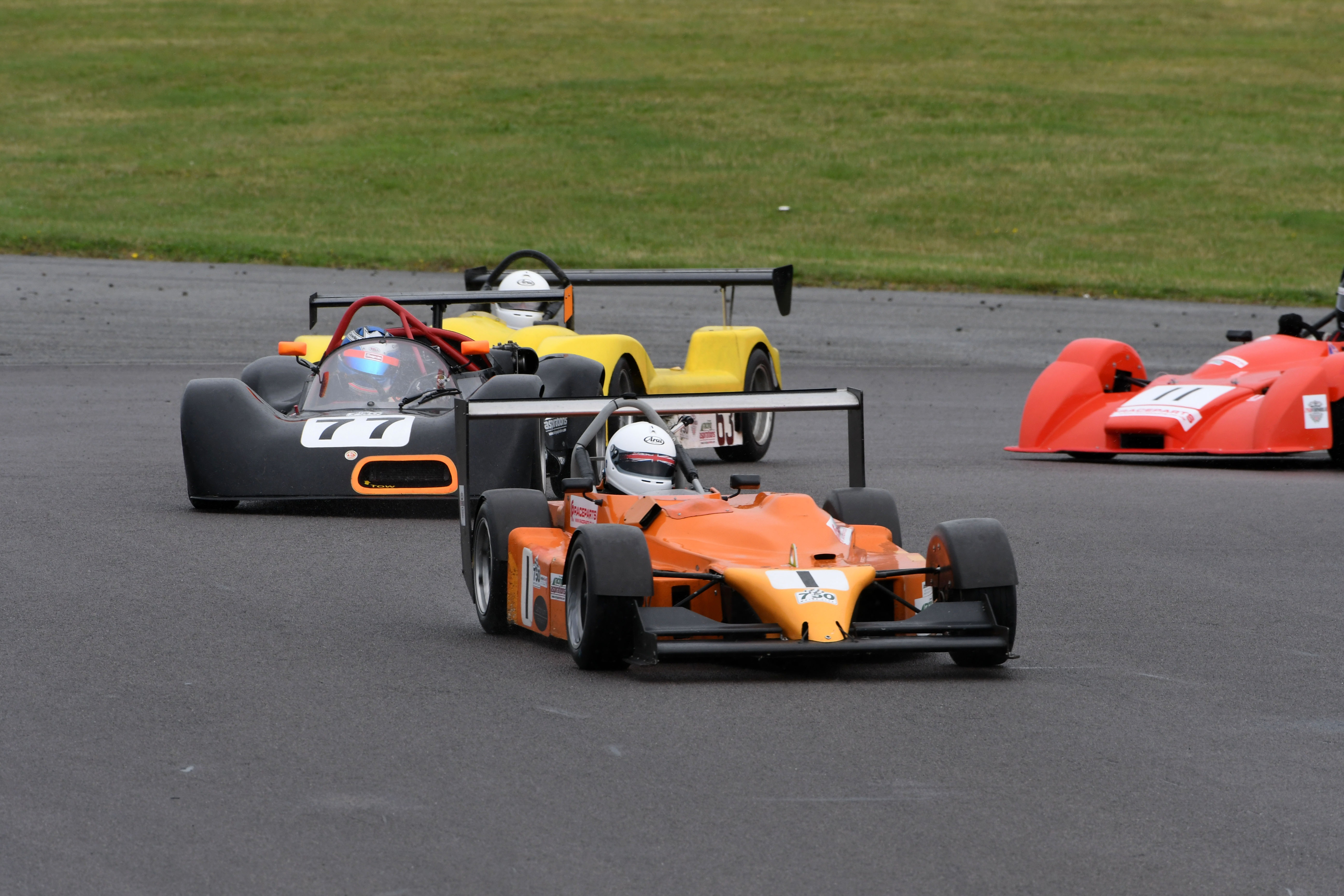
750 Formula was one of the categories to be fully scrutineered at Anglesey last weekend
Photo by: Steve Jones
“From an administrative point of view, it’s easier than contacting individual drivers,” explains Groombridge. “Over three or four meetings, we see all of our competitors’ cars at least once. If standards have slipped, they will be picked up over the next few meetings. There’s a value in scrutineering cars physically but seeing them at every meeting is of diminishing value.”
British Racing and Sports Car Club chairman Peter Daly agrees: “I don’t believe that’s a necessity [scrutineering all cars] – I believe they should scrutineer with more spot checks.”
Daly feels a different ethos should be adopted for the task of scrutineering whereby, instead of looking to catch out cheats or those with illegal equipment, drivers should be educated about what they have done wrong.
“A number of competitors don’t do it on purpose, they just need educating, so by doing random checks, we’re helping them,” he says. “If we instruct everyone to take their car to scrutineering at seven in the morning, it’s a pretty poor customer service experience. But, if the declaration is quite clearly incorrect, then the scrutineers should seek out those cars.”
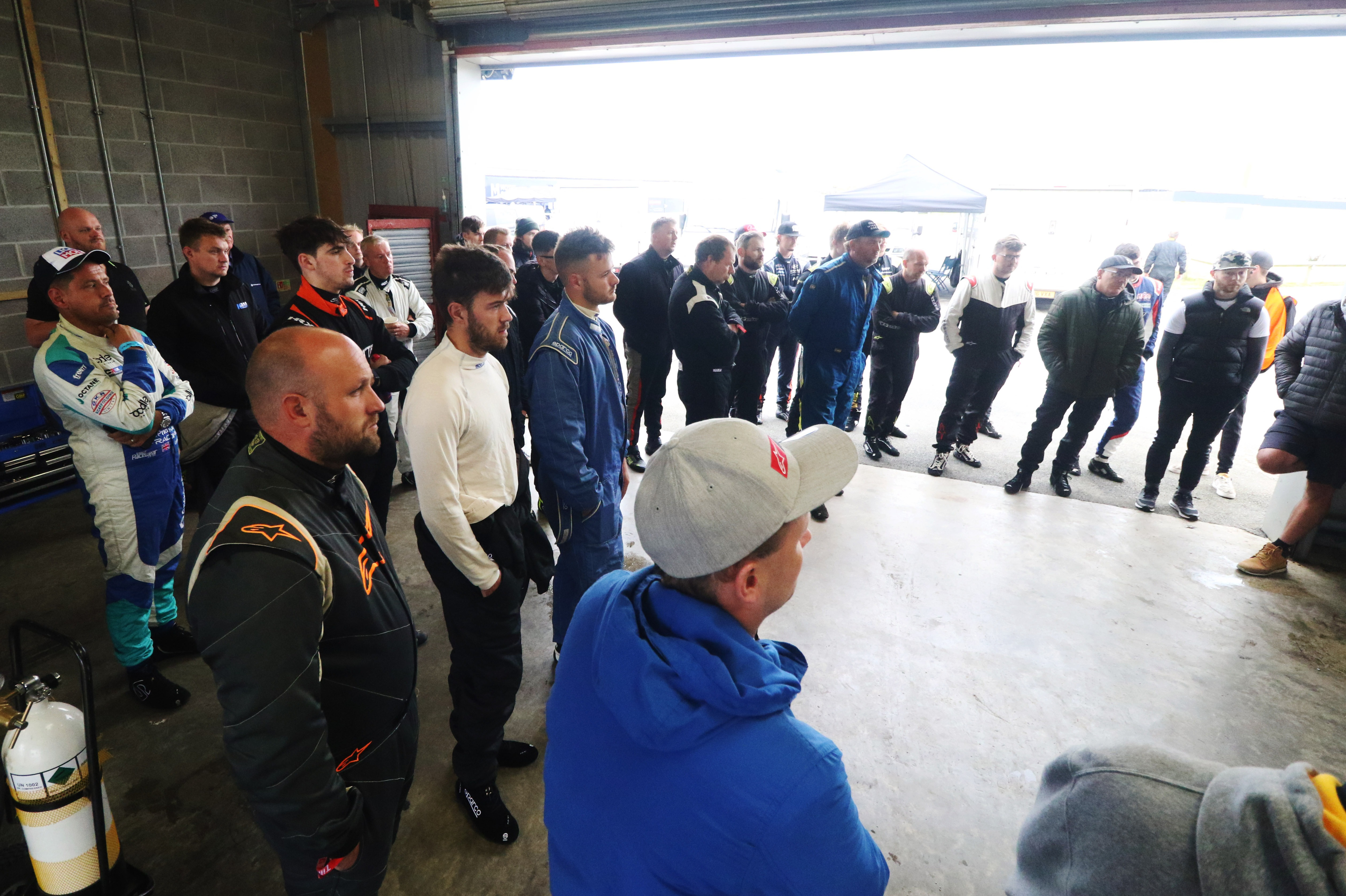
In-person driver briefings are considered important in reinforcing driving standards
Photo by: JEP
The clubs now have greater freedom beyond scrutineering; they can also run in-person driver briefings again. Daly believes these are vital in reestablishing respect among drivers, particularly after a spate of incidents, and are an important tool in maintaining discipline.
“We’ve certainly missed driver briefings,” Groombridge adds. “It’s all well and good putting this in writing, but you’re reliant on people reading that and taking it in. It also doesn’t give a forum for people to ask questions and seek further guidance.”
However, some aspects of the old ‘new normal’ will still be remaining for now. Motorsport UK ‘strongly encourages’ clubs to continue with online signing-on prior to events and that is what many are doing. With the continued threat from COVID-19, Groombridge says changing this aspect does not make sense.
“Essentially, that’s how we’ve been working for the last year and a half and we did all the hard work with licence checks at the start of the year for the majority of people, so it doesn’t seem like it would be advantageous to change that side of things,” he says, adding this does have the drawback of club staff having less direct contact with customers and therefore they miss out on some of that first-person feedback and interaction.

Restrictions on marshal numbers - including the ban on trainees - have now been lifted
Photo by: JEP
But perhaps one of the most significant freedoms that followed the change in advice last month is that trainee marshals, scrutineers, clerks and stewards are now allowed to attend events and continue their education. This is absolutely vital for safeguarding the future of our sport. It is no secret we have an ageing group of officials, and attracting fresh recruits must be an important priority over the coming months, requiring serious thought from all concerned.
The greater freedom clubs now enjoy is incredibly welcome and cannot be taken for granted. Who knows what lies in store in the coming weeks and months? But the pandemic as a whole has provided the perfect time to reassess practices for the future – and those debates will no doubt rumble on.
In the meantime, there is a final aspect also now a regular part of meetings once more: podiums and prize-givings. After the events of the past 18 months, it is certainly good to have something to celebrate again.

Traditional podium ceremonies are now appearing at more race meetings once again
Photo by: JEP


The exciting changes afoot to transform Thruxton

Why a more open mindset is making life less stressful for serial winner Slater

New Porsche 911 Challenge car to be introduced to Sprint Challenge GB

Hurd's hat-trick heroics as he storms through Mini field at Donington Park

The Radical rise of a top prototype squad

Mini masters put on another entertaining show at Thruxton

Is this Porsche’s latest superstar?

How Lola has revived a sportscar icon in a more sustainable form

Acosta's long road to his maiden MotoGP win

MotoGP Austrian GP: Acosta finally claims maiden win

Great debate: Which circuit should host the F1 2026 finale if the calendar has to change?

Live: MotoGP Austrian Grand Prix updates as it happens
Subscribe and access Autosport.com with your ad-blocker.
From Formula 1 to MotoGP we report straight from the paddock because we love our sport, just like you. In order to keep delivering our expert journalism, our website uses advertising. Still, we want to give you the opportunity to enjoy an ad-free and tracker-free website and to continue using your adblocker.


Top Comments