
Why Peugeot couldn't afford to take a Le Mans gamble in 2022
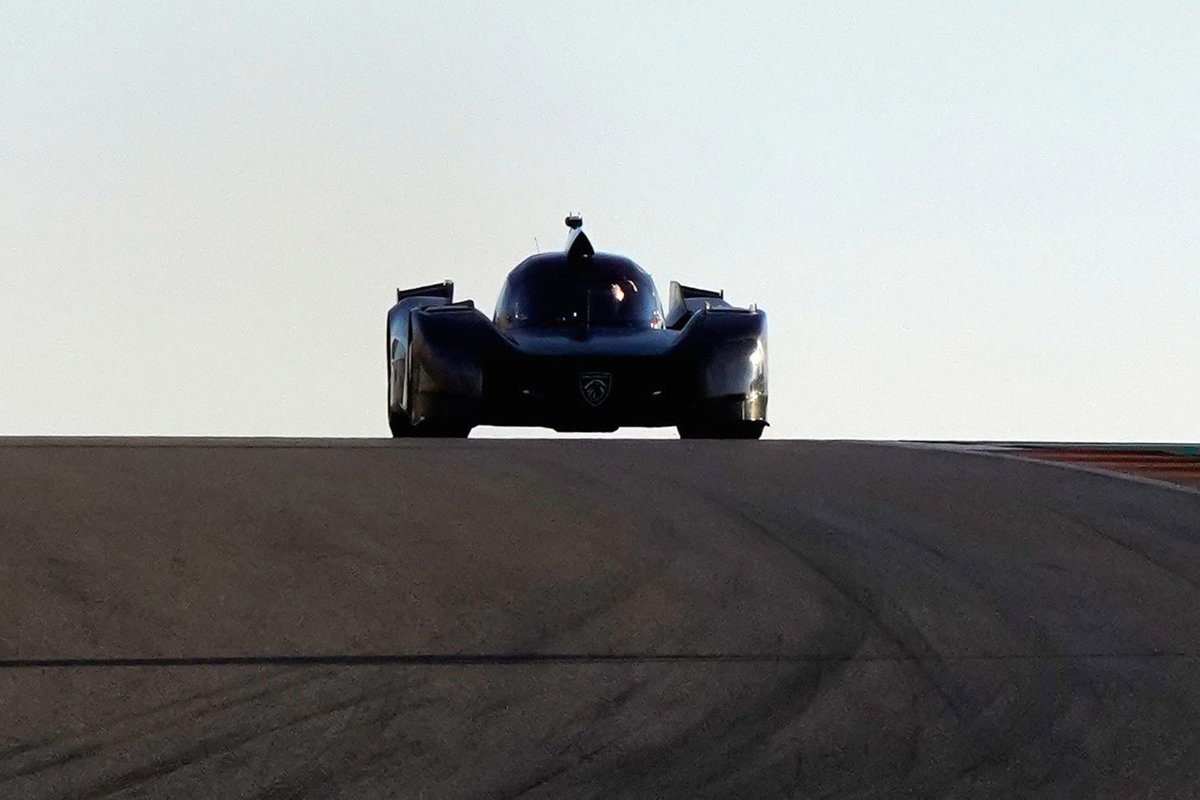
Ahead of the much-anticipated arrival of its new 9X8 Hypercar, Peugeot revealed that it would not be entering this year's Le Mans 24 Hours with its incoming machinery. Although development restrictions for homologated cars are partially responsible, the French marque can draw on its own lessons from its history in sportscars

Peugeot won’t be going to the Le Mans 24 Hours this year with its avant-garde 9X8 Le Mans Hypercar. Should you be surprised? Not if you have already gleaned an understanding of how the twin rule sets allowing entry into the World Endurance Championship and the IMSA Sportscar Championship work.
That’s an understanding of an entirely new philosophy at the pinnacle of international sportscar racing. The LMH and sister LMDh formulae are non-development categories. They have been framed that way in the name of cost reduction, and a massive one at that.
An LMH or LMDh prototype has to be homologated ahead of its first race, its specification frozen for the life-cycle of the regulations with only limited scope for modification. That represents a massive sea change in the way a manufacturer goes racing.
History provides a salutary lesson for Peugeot here, and I’m talking about its own illustrious past at the top of the sportscar tree. The French manufacturer’s 3.5-litre Group C car of 1990-93 — a two-time Le Mans winner, no less — was a triumph of development over design.
Peugeot, if you remember, turned out with the first iteration of the 905 at the final two rounds of the World Sports-Prototype Championship in 1990. Just six months later at the start of the following year’s renamed Sportscar World Championship, it realised it had a problem - and it went by the name of the Jaguar XJR-14. TWR’s take on the 3.5-litre regulations didn’t so much as move the goal-posts as pick them up and deposit them on another pitch.
The 905 actually won its first head-to-head with the XJR-14 at Suzuka in 1991 thanks to the unreliability of the new Jag, but Peugeot understood it was time for a rethink for a car that that had been two and a half seconds off the pace in qualifying. A major redesign turned the 905 into a winner on the SWC trail, while endless testing the development that went with it made it Le Mans winner twice over.

Keke Rosberg, Yannick Dalmas, Peugeot 905 Evo 1
Peugeot’s first Le Mans with the 905, with the car racing in its initial configuration for the final time, had been a disaster. The two cars went out early; they didn’t manage 100 laps between them.
A couple of months later, the in-house Peugeot Sport team appeared with the gloriously-named 905 Evo 1 Bis (why some of my colleagues contract that to 905B, I can’t understand). The revised car couldn’t stop Jaguar on its debut at the Nurburgring, but it would be beaten only twice more over the remainder of a career that came to a premature end with the demise of world championship sportscar racing and a shift away from the 3.5-litre regs by Le Mans.
Back then, a manufacturer could blood its car in competition, gain experience and understand its shortcomings, and then redress them at the drawing board and on the test track. Not so, in the brave new world of sportscar racing.
The hard deadline for Peugeot’s WEC entry on its announcement was the start of the 2022-23 season, which would have been six or so months from now
In days in the only very recent past, Peugeot would have gladly signed up to compete in the centrepiece round of the WEC this year on the basis that it would be good preparation as it gears up for its first full assault on the WEC in 2023. That’s not a luxury open to a manufacturer now.
For any of you already preparing to dust off your camping gear for a return to Le Mans after two years away, you shouldn’t be angry with Peugeot for not bringing out the 9X8 at the ‘big one’ this year. Don’t think it has delayed the debut of its new LMH. That’s not actually correct.
To understand its decision you have to remember how Peugeot’s return to top-flight sportscar racing was framed on its announcement back in November 2019. Back then, the WEC had just kicked off its first season running to what was dubbed the ‘winter-series format’ with a late summer/early autumn start and a climax the following June at Le Mans.

Peugeot 9X8
Photo by: Peugeot Sport
PLUS: Why name confusion could cloud sportscar racing's new golden era
COVID derailed the switch of calendar formats first talked about back in the years immediately after the rebirth of the WEC in 2012. The 2019-20 season, of course, didn’t finish at Le Mans, even after it was delayed until September. The season lingered on until November 2020, 14 and a half months after it had started at Silverstone two Septembers before. Abandoning the new format was the only option for the WEC as a result of the global health crisis.
The hard deadline for Peugeot’s WEC entry on its announcement was the start of the 2022-23 season, which would have been six or so months from now. It never ruled out bringing out what became the 9X8 before then, but it certainly never committed to it.
Nor should we forget the challenges the world has faced since Peugeot delivered its big news more than two years ago, that’s the big wide world and our own little world of motor racing. COVID, supply-chain issues and multiple changes to the LMH rulebook as the convergence process with LMDh ran its course have all been massive challenges.
It is also important to remember the development timelines of some of its rivals from next season when making a judgement call on Peugeot’s decision not to go to Le Mans in June.
Porsche’s 2023 LMDh challenger hit the track only a few weeks after the Peugeot: the first roll outs of the respective cars were in the days either side of the Christmas holidays. The new Ferrari LMH should be testing in the summer, along with the Cadillac LMDh that will grace the WEC next year.
So the Ferrari could have seven or eight months of testing before its race debut at the Sebring 1000 Miles in March 2023, the simpler Caddy LMP2-based car six or so months before it pitches up the Daytona 24 Hours in January. And the Porsche is going to have a full year’s worth of running prior to racing for the first time.
Peugeot 9X8
Photo by: Peugeot Sport
Peugeot needed to be racing at the Spa WEC round in May if it was to go to Le Mans. It was a necessity because of the Balance of Performance process that is an essential part of sportscar racing’s new era. That would have given it time for only three and a half months of testing.
Peugeot has to be sure it has a competitive and reliable car before it begins racing. It couldn’t head into competition with a machine that will likely be its weapon in the WEC until the end of 2025 unless it was totally confident of that. The rules do allow a manufacturer to build a second car within the life of the regulations, but given the cost and gestation periods of modern racing machinery that’s a route it would surely want to avoid.
It would be wrong to take a pop at Peugeot for opting to give the 24 Hours a miss this year and waiting until the summer before blooding the 9X8 in competition
Otherwise it’s stuck with what it’s got at the point it homologates the car ahead of its race debut, save for the so-called ‘evo jokers’ laid down in the regulations. A manufacturer can modify five areas of the car, defined by the homologation headings in the rules, on performance grounds. The rules are freer in terms of the modifications allowed to improve reliability, but updates still have to be applied for to the WEC rule makers.
So it would be wrong to take a pop at Peugeot for opting to give the 24 Hours a miss this year and waiting until the summer, which almost certainly means the Monza WEC round in July, before blooding the 9X8 in competition. It was a gamble it couldn’t take.
And don’t forget it hasn’t ducked out, because it never actually said it would be at the Le Mans 24 Hours this year.

Peugeot 9X8
Photo by: Peugeot Sport


Why Toyota’s 2026 WEC triumphs have put it into the all-time greatest endurance racing team debate

How Toyota destroyed the competition to seal the WEC crowns

When Can-Am made its controversial comeback

WEC Barcelona: Genesis secures maiden series pole from Toyota

How Ford is "hitting milestones" in preparation for WEC Hypercar assault

How Porsche Penske finally broke its Petit Le Mans duck

Why there’s no perfect solution to the WEC safety car conundrum

How an “informed gamble” enabled Toyota to beat Alpine in the Fuji 6 Hours

How Antonelli levelled up his character to be F1 2026's world champion-elect

FIA set to close F1 cost cap loophole with new rules

Norris promises to make "better decisions" following fresh talks over Singapore GP clash

FIA expects F1 races in Qatar and Abu Dhabi to run as planned
Subscribe and access Autosport.com with your ad-blocker.
From Formula 1 to MotoGP we report straight from the paddock because we love our sport, just like you. In order to keep delivering our expert journalism, our website uses advertising. Still, we want to give you the opportunity to enjoy an ad-free and tracker-free website and to continue using your adblocker.


Top Comments