
The fundamental questions facing a Formula E junior series
As Formula E prepares to enter its new Gen3 era, many have pondered the prospect of its existing machines continuing in a feeder category. But before such a programme could be embarked on, there are several important questions that must be satisfactorily answered

Formula E bosses have made no secret of their desire to establish an all-electric support series. But the pandemic, the push for financial regulations and the framework for the vitally important Gen3 car has so far prevented it from appearing at the top of the agenda. Plans for the latter two, at least, are now drawn up and signed off. As such, again talks can take place as to what a ‘Formula E 2’ concept might look like.
The new technical regulations for the 2022-23 season will put the Gen2 machines out to pasture. So, in the same way the Gen1 car was touted as a possible foundation for a feeder series, albeit one that never came to fruition, therein again lies the most obvious path to bolstering the weekend schedule.
However, the departure of BMW, Audi and Mercedes from Formula E shows the challenges that have been presented just in ensuring the main event remains attractive to competitors. So, what obstacles does a possible junior series have to overcome?
Would it serve a purpose?
Issues such as sourcing a spec powertrain and evaluating viable race locations will be mere details if ‘Formula E 2’ doesn’t function. Would teams jump to hire an electric junior champion rather than a cash-strapped FIA F2 race winner or an ex-grand prix driver?
Here, Formula E’s inbound cost cap might be a key trigger in validating a feeder series. From 1 October 2022, teams must comply with a €13 million cost cap. But that becomes more interesting with a 2024-25 rise to a €15 million limit that crucially will include driver salaries.
Formula E’s current crop are well remunerated, with the highest earners comfortably taking home seven figures a season. That absolutely has the potential to provide a major stumbling block if the spreadsheets are cutting it fine against the new financial ceiling.
A cheaper driver, looking to get their big break in Formula E having done a ‘Kyle Kirkwood’ - winning 10 of the 20 races in Indy Lights last season to dominate the title picture - would be well worth considering if they can offer the pace amid the new tightening of purse strings.
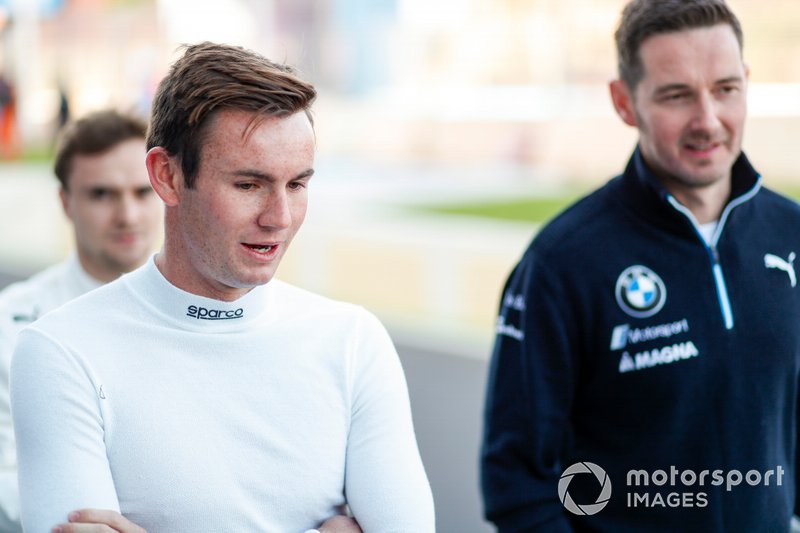
Kirkwood has shown the success of the Road to Indy ladder, and Andretti's Griffiths believes a similar model is viable
Photo by: Sam Bloxham / Motorsport Images
Andretti Autosport team principal Roger Griffiths, who gave Kirkwood a Formula E test in Marrakech in 2020, would absolutely look at hiring an ‘FE2’ champion.
He tells Autosport: “You'd definitely look at it. The driver market in Formula E, there's a lot of very expensive guys out there. If you can get somebody at a reasonable price, they come with some prize money, and you think they have a shot at being competitive in Formula E.
“The other advantage is that perhaps they know seven out of the 12 tracks that we go to because they've done a season of a lower series. There's definitely a lot of pros about it.”
It must remain financially attractive by keeping spending down, as an ‘FE2’ comes with the assumption that its commercial appeal will be scaled back
To prove its credentials as a feeder, a nascent electric junior category would likely need to retain an element of energy saving for drivers to master that is applicable to Formula E.
Sticking with an American example, the Mazda Road to Indy ladder should be seen as a model to replicate, with the champions of each respective series able to attain a seat and bring sustainable prize money to make them an attractive target in the tier above. There’s no point in having a feeder series unless its top talent can ‘feed’ into the bigger show. But here, a concept for ‘Formula E 2’ has the box ticked…
Would teams sign up for it?
…And not just in terms of drivers. It could equally provide a new generation of engineering talent that are picked up by bona fide Formula E squads. That would do nothing to hurt the credentials of an ‘FE2’ to the teams who would need to populate it.
Griffiths continues: “We use Indy Lights as, not only a training ground for the drivers, but also a training ground for our staff. So, engineers and mechanics come up through that route and ultimately get promoted onto the big cars. So that certainly will be another good reason to do [a Formula E support rung].”
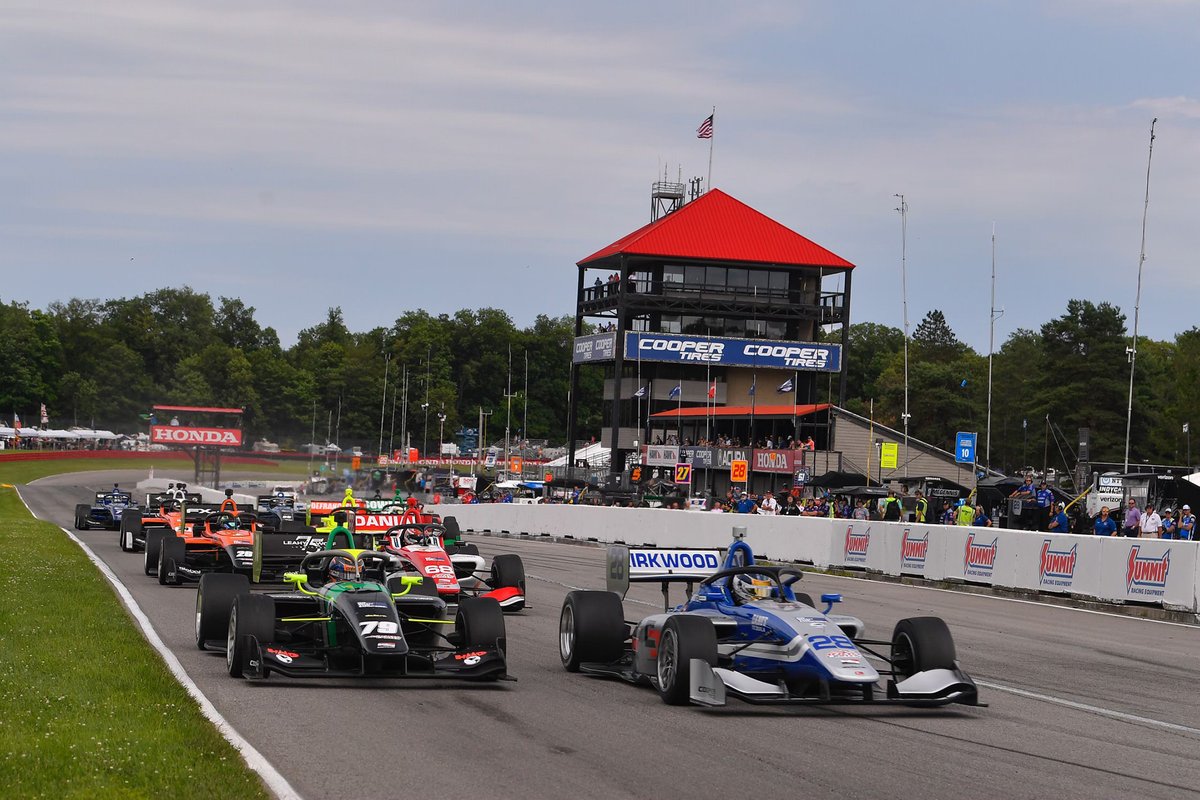
Just as Indy Lights offers a valuable training opportunity for future IndyCar staff, an electric junior series could be used to blood future FE engineers and mechanics
Photo by: Road To Indy
That is one way to ensure that teams will commit to run cars in an electric junior championship. But it must remain financially attractive by keeping spending down, as an ‘FE2’ comes with the assumption that its commercial appeal will be scaled back.
If a motorsport programme can’t be bankrolled indefinitely, there’s always the risk teams won’t join the grid or will leave before too long. As such, ‘FE2’ must be cost effective, helped by the use of cheaper cars, and it also must not serve as a distraction to any other programmes that a team presides over.
An alternative route might be to adopt the system used in the first season of W Series, whereby there were no standalone teams. Instead, all cars were run by a central support crew. A title sponsorship deal for ‘FE2’ would aid this model by offering an attractive enough pot to the likes of ART Grand Prix to take on the responsibility.
Something else to consider is replacing damaged parts. The unforgiving concrete barriers that dictate a Formula E course can, and do, leave their mark. Not only would car constructor Spark Racing Technology need to transport sufficient spares for ‘FE2’ in addition to the Gen3 cars, or outsource it, but the bill for a crash-prone driver will prove a disincentive to entering ‘FE2’ if it becomes a loss maker for a team.
Although when the likes of NIO 333 has been vocal in its desire to hire a Chinese Formula E driver, it could potentially tap up an oven-ready candidate by funding a junior team.
Would drivers be willing to sacrifice an F1 dream?
An increasing number of junior single-seater drivers have professed their ambition to race in Formula E as the series has firmly established itself. But that comes in the current landscape when there’s less of a defined path into Formula E. What about when, rather than if, that changes. Would an up-and-comer stand by their word and actually take the plunge into an ‘FE2’ to effectively end their ascent up the ladder to F1?
The likes of Griffiths saying he would consider harvesting the cream of the junior electric crop to potentially offer them a plum Formula E seat certainly helps. But if the door to F1 has been shut by a lack of funds, then ‘FE2’ must prove to be a less expensive alternative. When the current budget for a mid-pack FIA F2 seat is above £2 million, ‘FE2’ can only get off the ground if it can markedly undercut that and provide a realistic end goal.
As Griffiths explains: “Getting the price point down is going to be crucial. If you look at the budgets to run Formula 2, if you look at the sponsors on the car, for the most part, they're personal sponsors of all the drivers that are bringing the money.
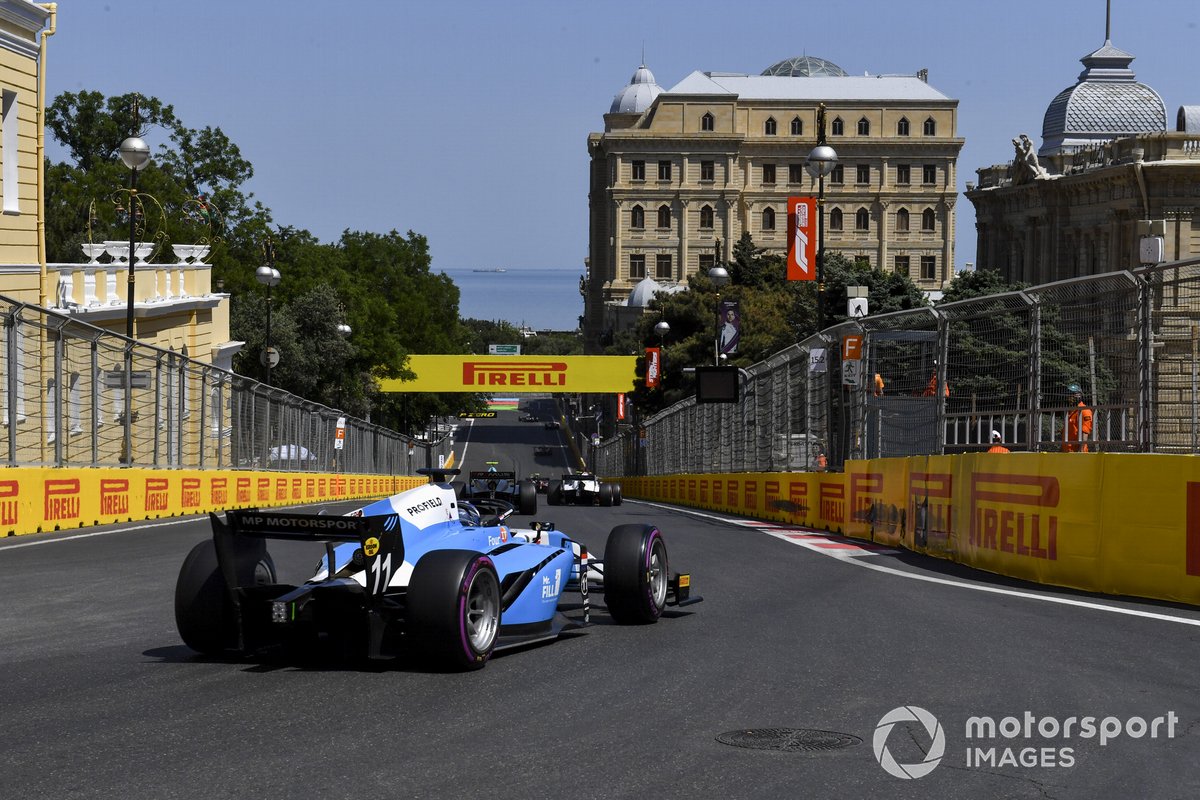
Costs of an electric junior series would need to significantly undercut F2 to incentivise drivers to abandon their F1 dream
Photo by: Mark Sutton / Motorsport Images
“They're either family businesses or friends with the family or something like that. There are no consumer brands. So that's kind of what I imagine would happen in a junior Formula E series.”
Here, Formula E would do well to avoid other models in motorsport whereby the car and associated parts are sold to the championship, who in turn sell it on for a considerable mark up and pocket the change. That filters to the drivers, who must bring greater backing as a consequence.
What would the cars look like?
The short answer appears to be ‘like the Gen2 machines’ in that the out-going cars would be repurposed to become the foundation of an electric support series. But that’s only so far as the body kit as its likely they would require an overhaul under the skin to serve their purpose as a training ground for aspiring Formula E talents.
A Gen2 powertrain is a work of art. Tightly packaged and highly efficient, it is therefore prohibitively expensive to be sustainable as the bedrock of a lesser category. Then, even though the Gen3 rules will have come into play, there’s still significant intellectual property that would have to be divulged if ‘FE2’ would take the seemingly only logical path and become a spec series akin to FIA F2, Regional F3 and so on.
To define the spec of a ‘FE2’ powertrain means considering the race format. As a junior series it would unlikely share a similar 45-minute plus one lap set-up to Formula E
Although Audi has now departed Formula E, its in-house motor and invertor configuration underpin its new Dakar Rally challenger, meaning the tech secrets will remain relevant for years to come. As such, it’s likely that a common powertrain must be sourced from different kind of manufacturer. Dragon Penske Autosport technical partner Bosch or NIO 333 affiliate Integral Powertrain could be more feasible, but still suffer from the same IP issue.
Looking beyond the current incumbents and giving a brief to the likes of transmission specialist Xtrac or engineering firm Ricardo could be the way to go here. Likewise for the suspension - Ohlins, Bilstein etc could provide off the shelf components in theory.
But to define the spec of a ‘FE2’ powertrain means considering the race format. As a junior series it would unlikely share a similar 45-minute plus one lap set-up to Formula E. And although Gen3 will take a big step on with a power hike to 470bhp, perhaps still organisers would look to scale back a junior series platform from the Gen2’s 300bhp in race trim.

Gen2 Formula E cars with a standardised powertrain would be the most attractive solution for an electric junior series
Photo by: Andrew Ferraro / Motorsport Images
This would further help keep a lid on costs by reducing the strain and therefore increasing the lifespan of a battery. But with the battery supplier for Gen3 switching from McLaren Applied to Williams Advanced Engineering, perhaps the former party might not wish to continue its ties by providing support at each event for a series that isn’t front and centre. Unless it would meet halfway and agree to the current Gen2 batteries being refurbished and refitted for the purposes of ‘FE2’.
Where would it race?
While the tight confines of the likes of the Santiago E-Prix paddock leave little room to accommodate another series, fortunately this factor is less of a stumbling block. That’s thanks to the precedent set by the short-lived Jaguar I-Pace eTrophy that ran in support of select Formula E events for two years.
While grids were uninspiring in the main, dropping from 12 to 10 entries across six teams for its final campaign, and that might be a concern while making plans for ‘FE2’, it can provide an answer as to where might fit a support series.
Formula E’s mission statement to bring EV technology to the masses by racing in close proximity to some of the most famous cities in the world naturally entails limited space. But the 2022 calendar houses potential locations to accommodate a support series that would again not run at every single race weekend.
The weighty Jaguar SUVs were slated for the disrupted 2019-20 season to dock in Diriyah (Saudi Arabia), the Autodromo Circuit Rodriguez (Mexico City), Rome (Italy), Berlin (Germany), New York City (America) and the London ExCeL Centre. All will appear on the calendar for next year as it stands.
Monaco, as shown by FIA F2, can also just about fit another paddock. The new races in Jakarta, Vancouver and Seoul are lesser-known quantities. But even there, part of Vancouver’s bid encompassed running a celebrity race and so the False Creek location could again be a potential home to ‘FE2’ - although the cost of freight to North America would certainly be a downside.
As an aside, ‘FE2’ would presumably not require the extra hour in the timetable that the Jaguars forced. Wiggle room was built into the schedule should their girth have dislodged any of the concrete barriers to force hasty track repairs.

Previous experiences with i-Pace eTrophy on the undercard proves that a support series could be logistically viable
Photo by: Malcolm Griffiths / Motorsport Images


Marko: Perez improved F1 form because 2025 contract talks are at stake

Russell explains how low-fuel runs expose Mercedes F1 inconsistency

Leclerc: No answer for "once in a season" Japan F1 qualifying struggle

Sainz: Now time to "speed up" talks to find 2025 F1 seat

Hamilton: Vettel an "amazing option" as Mercedes F1 replacement

Sargeant to race repaired F1 car in Suzuka; no spare Williams until Miami

Pirro leaves role as McLaren F1 academy chief

The impatient pair who’d hoped to be a thorn in Red Bull’s side again

How the M8B became the most dominant car in McLaren’s history

What Verstappen knew about Red Bull’s big upgrade when he signed his new F1 deal

Colapinto urges fans to stop online abuse: “You’re not helping me or my future”

Evans given a hero's homecoming after WRC title triumph
Subscribe and access Autosport.com with your ad-blocker.
From Formula 1 to MotoGP we report straight from the paddock because we love our sport, just like you. In order to keep delivering our expert journalism, our website uses advertising. Still, we want to give you the opportunity to enjoy an ad-free and tracker-free website and to continue using your adblocker.


Top Comments