


How Seidl enacted his recovery plan to bring McLaren back to F1 victory
McLaren ended a nine-year Formula 1 win drought with a stunning 1-2 finish at last month’s Formula 1 Italian Grand Prix. As the latest step on a remarkable path of recovery from the bottom of the grid, team principal Andreas Seidl has mapped out even greater feats for the future

“I’ve always kind of felt like McLaren is Star Wars. But we became a bit Darth Vader and I think we needed to be a bit more Luke Skywalker”
The above quote is how McLaren CEO Zak Brown started 2021 – the words encapsulated the previous era his squad was still struggling to leave behind, while looking forward to the new hope of a brighter future. Now, as the current season heads into its concluding episodes, McLaren has very much stepped out of the dark side and is enjoying its time back in the light.
An apology: we’re staying with Star Wars references for a while yet. This is because Brown was right – McLaren had gone a bit too Darth Vader in the years that preceded its shocking slide down the grid in the middle of the last decade. There was the vast, shiny new base – technologically impressive, but sterile and somewhat soulless. The factional infighting that caused those famous divisions in 2007, the ‘Spygate’ controversy that year too and the massive fine that followed, plus the later boardroom battles and leadership usurpation. The Formula 1 colours got ever darker, the sponsors disappeared, the results dried up.
McLaren started its journey back towards the light almost immediately after Brown took over as McLaren Technology Group executive director in late 2016. But while the cars were restyled with papaya orange in 2017, the force of change took longer to produce meaningful results. A second ninth-place finish in three years in the constructors’ standings did become a step forward to sixth when Honda was traded for Renault power in 2018, but greater success took longer, and has only become truly magnificent in recent weeks.
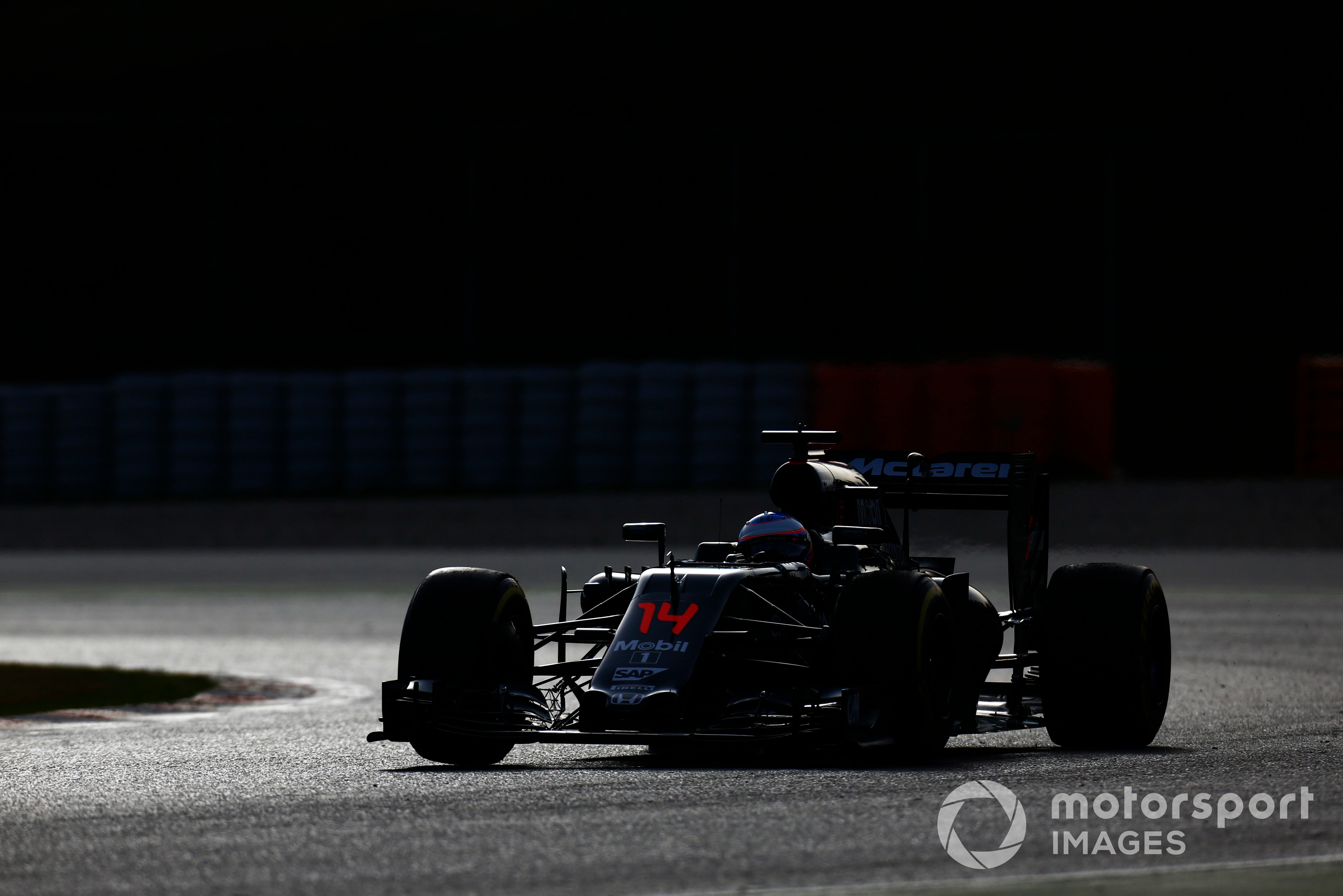
Fernando Alonso testing the McLaren MP4-31 in Spain ahead of the 2016 Formula 1 season
Photo by: Zak Mauger / LAT Photographic
McLaren returned to the podium (sort of) with Carlos Sainz Jr’s third place at the 2019 Brazilian Grand Prix, although the Spaniard was not part of the official ceremony and inherited the position thanks to Lewis Hamilton’s post-race penalty. And that is a key year in McLaren’s transformation. That’s because of the arrival of one figure heralded in the Luke Skywalker leadership Brown wanted. And, despite his obvious youth and exuberance, it was not Lando Norris.
Andreas Seidl had been selected by Brown to run McLaren’s F1 operation, his appointment ending a series of upper management changes at the team that had characterised the decade following 2007 and Ron Dennis’s final fall from his position as McLaren supremo. It meant giving up an expected promotion to run Porsche’s motorsport division – a factory programme steeped in legend, and following on from his successful leadership of the marque’s LMP1 squad with the 919 Hybrid. Seidl had previously overseen BMW’s DTM return in 2012, after working with the manufacturer’s motorsport programme for six years from 2000, then becoming BMW Sauber’s F1 head of track operations until 2009.
"Despite all the money that is involved, despite the sport being very technical, it’s still a human sport. It’s a team sport. You can only be successful as a result of a big team effort" Andreas Seidl
Seidl started at McLaren in May 2019, with the freedom and confidence from Brown and the McLaren shareholders to run the show as he saw fit. That meant addressing and understanding the historical problems that had led to McLaren’s fall down the F1 grid, as well as learning where it was still playing catch-up to Mercedes and Red Bull.
“The most important thing was when I started to work out as quickly as possible, together with the team, where we simply have seen the deficits compared to what we thought is important in order to be a modern Formula 1 team able to fight at the front,” says Seidl. “This process, it’s simply important to be honest, transparent and to not hold back. Put everything on the table.”
There were problems with resources – “There was simply a big lack of investment for a long time at McLaren, which just resulted in the situation that we were massively behind,” says Seidl – that stemmed from the spy-scandal fine, as well as McLaren’s disadvantageous payment terms compared to Mercedes, Red Bull and Ferrari in the 2013 Concorde Agreement. The latter played a key role in establishing an unofficial two-tier F1, which remains the case to this day, or at least until the full impact of Liberty Media’s cost-cap plan is felt.

McLaren team boss Andreas Seidl
Photo by: Steven Tee / Motorsport Images
From dominating F1 for parts of the 1980s and 1990s, plus leading the way with Ferrari in the 2000s, McLaren was a ‘Class B’ squad for much of the past decade. The resource squeeze was felt significantly in car performance terms, and Dennis’s big move to rejoin forces with Honda backfired spectacularly – the difficulties the two parties encountered ultimately drove the engine manufacturer onto later success with Red Bull, once McLaren had let go.
PLUS: How Honda restored its F1 reputation
Seidl needed to organise the team in a new way to transform its fortunes. He did that by arranging what he calls a “quite traditional [racing] organisation” reporting structure. After taking the title of ‘team principal’ to reflect his desire for a team operation rooted in traditional successful motorsport operations, Seidl arranged a three-pronged leadership body aimed at simplifying McLaren’s overall F1 structure. This had previously grown overly complex, famously with responsibilities for areas such as car design being shared by several people. The chosen trio were James Key (executive director, technical), Andrea Stella (executive director, racing) and Piers Thynne (executive director, operations), plus team manager Paul James.
“I strongly believe that in the competition we are in here in Formula 1, [the traditional organisational structure] is clearly the way forwards,” says Seidl. “And there’s also an important requirement – how the reporting lines look, that responsibilities are clear and also the accountability.
“What is really great and also fun for me is to see how much we are aligned between us four, in terms of the vision or the approach – how we want to get this team back to the front in Formula 1. They are also great leaders, leading their divisions not just from a technical perspective, but also in terms of the human side, which is very important for me.”
After establishing McLaren’s clear remaining deficits, Seidl and co pressed on with using new resources to make big infrastructure investments, such as the new windtunnel being built at the McLaren Technology Centre. They also opted to ditch the Renault engines that had been bought in to replace Honda and take Mercedes power from the start of 2021. That switch, which Seidl personally pushed hard for, was viewed as so pivotal that McLaren pressed on with making the change even through the pandemic-enforced car-design carryover requirements for 2021. This meant it was forced to spend its permitted development tokens adapting the MCL35M to fit the Mercedes engine.
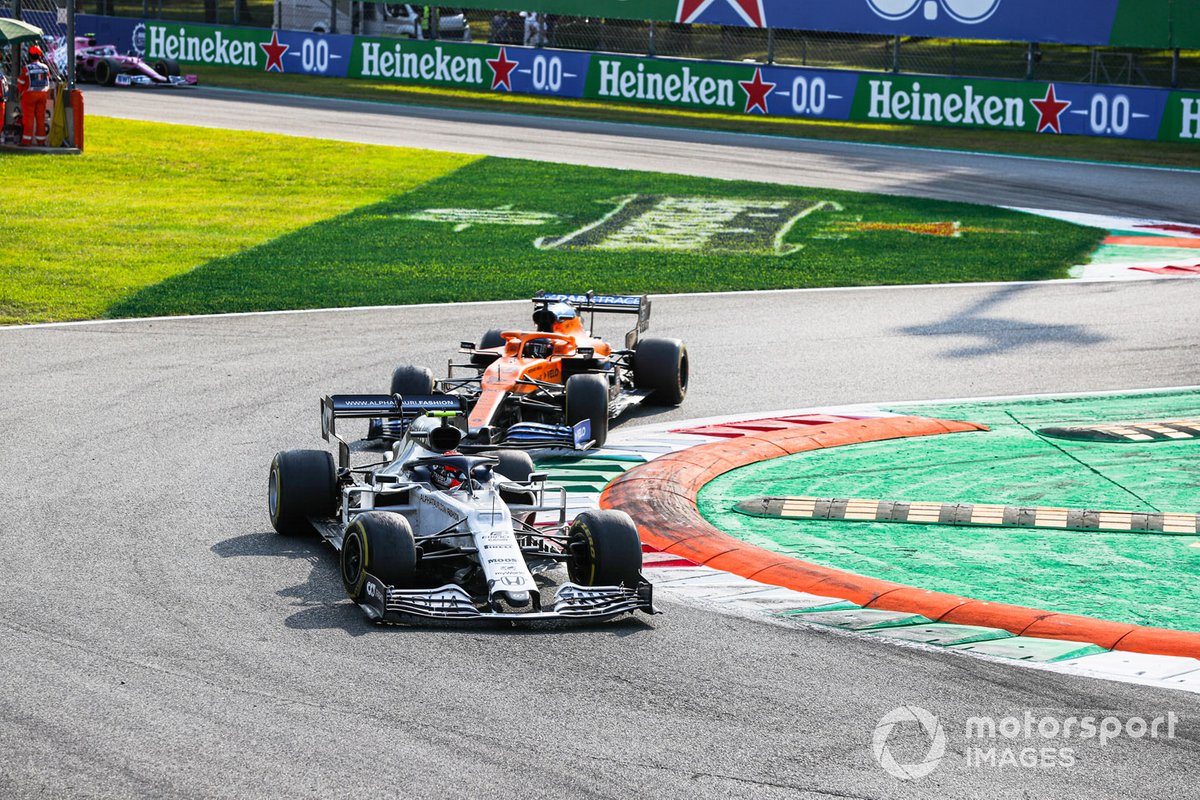
Carlos Sainz Jr narrowly missed out on victory for McLaren to AlphaTauri's Pierre Gasly in the 2020 Italian GP
Photo by: Charles Coates / Motorsport Images
But Seidl wasn’t going to let development of the human side of McLaren’s operations be addressed purely by trickledown impact from his leadership team. Together, they were to enact the transformation Brown desired – to make wholesale cultural changes across the squad to go from dark side to light.
“One reason why I like this sport so much is because in the end, despite all the money that is involved, despite the sport being very technical, it’s still a human sport,” Seidl explains. “And it’s a team sport. You can only be successful as a result of a big team effort. We have the opportunity, being in sport, that we also use all these emotions – these ups and downs, which are normal and come with sport – as a possibility or opportunity to unlock a lot of additional potential from a team or from people.
“And that’s what I’ve always tried in the last 20 years, within my people, the people around me or the people I was responsible for, to create this special spirit of a whole sports team.
"If you have fun going to work or if you wake up in the morning and know when you go to work that you enjoy it, that’s key in order to deliver" Andreas Seidl
“I’m not just talking about the two drivers here, who are obviously the heroes of this sport and who are very important in terms of getting this spirit inside the team. I’m also not just talking about the race team. I’m really talking about all the 850 people we have within the team, including the people back home in production, engineering, in finance, HR and so on. Because, from my point of view, if you manage all these people to feel part of a big sports team and see themselves also as athletes of the team, that’s very important to go the extra mile each day, which is important if you want to compete at the front in Formula 1.”
PLUS: The numbers that reveal McLaren's revival
It’s not hard to see the culture Mercedes has created during its incredible run of success since 2014 as a clear comparison. Toto Wolff has arranged his squad so that the feelings and situations its employees face are addressed or understood so that they can deliver their best when they go to work. If the best person for the job needs certain requirements, or wants to discuss difficulties they are facing in their personal lives, then the team works to assist them – ultimately for its benefit. And team culture means trusting staff to make mistakes within key freedoms, to try a range of ideas and not be discouraged if they go wrong, to know that their every effort is making a difference. Unity, something that often seemed lacking as McLaren dropped down F1’s pecking order, is critical.

Daniel Ricciardo and Lando Norris celebrate with the McLaren team members after its 1-2 finish at the 2021 Italian GP
Photo by: McLaren
“To me, it is important to create a culture where people simply have fun going to work,” says Seidl. “Because it’s quite simple and straightforward – if you have fun going to work or if you wake up in the morning and know when you go to work that you enjoy it, that’s key in order to deliver. In the end, we are what we are because of our people. And it’s very important to have that focus and to make this investment.
“That’s definitely something where we already made good steps forward in the last two years. It’s also not an easy process – to change a culture of a big team with a big history, of a team that was also quite successful in the past, which also had to accept that success from the past doesn’t help you today. There is no automatic mechanism that will give you the success from the past again.
“You need to create this ambition and this self-confidence that you can actually do it, which is especially tricky when you have bad years. At the same time, you need to be careful that it is the right amount of self-confidence and ambition, that it is not in an arrogant way. And I think that’s where we invested a lot of energy.
“Another important thing is that I expect with my leadership team, and again with their people, that they feel empowered, that they know they have freedom and support in order to do things in a way that they think has to be done to be successful. Because that’s how I grew up. In the last 20 years, I always had bosses that gave me this freedom and support, and that’s how I delivered and how I enjoyed work.
“I experienced the same again with Zak and the shareholders that put a lot of trust in me and in my team, and give me all the support I need, especially when it comes to resources. But at the same time, I have full freedom in order to bring in my style and my experience, which is obviously also very important for me. And, again, I try to live exactly the same thing in front of my team.”
McLaren’s cultural change could be seen, very positively, in the playful friendship Sainz and Norris formed during their two seasons as team-mates. The positivity has remained with Daniel Ricciardo coming on board (how could it not with such a perpetually smiling driver?), despite the Australian’s struggles to gel with the MCL35M and Norris vowing to be “less jokey” as his F1 career progressed.

Daniel Ricciardo, McLaren MCL35M, Lando Norris, McLaren MCL35M
Photo by: Charles Coates / Motorsport Images
Seidl encourages his drivers to show their personalities to the world, but also make sure they are familiar with the wider McLaren team. This hasn’t been easy of late thanks to the COVID-19 restrictions, although Ricciardo notes “thanks to video calls and group chats, we can still create relationships”. Team dinners are a regular feature on race weekends, while Norris “even sees people at the golf club” between events. The Briton also lives “three minutes or something away from the factory, so I am always in there”, getting to know the various divisions that build and operate McLaren’s F1 machinery. Both drivers insist McLaren is now, in Norris’s words, “one big family”.
“There’s no hierarchy or anything like that,” adds Ricciardo. “The kind of culture of like if someone falls down, pick them up and move forward together, and I feel that. I think everyone in the team really feels privileged to be part of McLaren.”
"We already have some ingredients in the team that are important for battling teams like Mercedes and Red Bull" Andreas Seidl
The 2020 season brought more silverware and real podium visits for Norris and Sainz, with the Briton adding a hat-trick of podiums in 2021’s first half. The MCL35M has retained its predecessor’s excellent traction and straightline-speed prowess, which allowed Norris to make progress in the wet to finish third at Imola, then repeat that result in the one-off special livery in Monaco. In the two Austrian races he was able to disrupt things for Red Bull and Mercedes, earning praise from Hamilton as they battled in the second event. The 21-year-old has been with McLaren since joining as a junior driver when he raced in European Formula 3 in 2017, and feels the changes Brown and Seidl have enacted means the “whole team is in a much better state”.
“I think one of the things we’re most excited by is going into next year, and having this platform, this base from the team, with the new regulations and rule changes,” says Norris. “Going into it like that – definitely the strongest we’ve been for many years.”

Daniel Ricciardo congratulates Lando Norris on securing pole position at the 2021 Russian GP
Photo by: FIA Pool
For Seidl, Norris has even been “instrumental in the development of the team over the past three years”, since he has “matured as a driver and professional athlete and continues to grow”.
Seidl adds: “Lando has been an important force in the evolution of the team, and his performances have supported our progress, especially in the first part of this season as Daniel was adapting to the car.”
Podiums aren’t the best measure of F1 success – there’s always a bigger fish to consider in terms of race victories. But McLaren will also head into F1’s new era as a winning operation once again, thanks to its surprise but commanding 1-2 result at Monza. After Sainz – who recognised his old team was “ready to win championships as a race team, they just need a car capable of doing it” when he headed for Ferrari – got so close to the shock win that went to Pierre Gasly and AlphaTauri in 2020, the team capped its climb up the pecking order with success for Ricciardo, backed up by Norris.
The Italian GP triumph demonstrated the team’s progress perfectly. It “expected to have a competitive car”, according to Seidl, because the Monza layout plays to the MCL35M’s strengths, but still faced a tough time beating Mercedes in particular. McLaren did need the Black Arrows’ dominant position post-Friday qualifying to implode in an engine-change penalty for sprint race winner Valtteri Bottas and Hamilton to mess up the start of that event, but its drivers seized their chances magnificently.
This was aided by McLaren producing the fastest pitstop of the race, plus adapting its strategy and car positioning well to ensure it could keep its 1-2 once Verstappen and Hamilton took themselves out of contention in that crash.
PLUS: Why Ricciardo was set for Monza F1 triumph even without Verstappen/Hamilton crash
With Ricciardo shoeless and constantly grinning, Seidl led the team through rapturous celebrations in the Monza pitlane. The softly spoken German, reportedly a perfectionist unafraid to lay down the law if the situation requires it, was loudly cheering both Ricciardo and Norris as McLaren gathered for its team victory picture.
“[It was a] great experience for all of us,” Seidl notes. “Because it just showed that we already have some ingredients in the team that are important for battling teams like Mercedes and Red Bull. That was good to see.”

Daniel Ricciardo celebrates with his team in Parc Ferme after winning the 2021 Italian GP
Photo by: Andy Hone / Motorsport Images
McLaren made sure its staff back in the UK got in on the celebrations too once the race team had returned to base in the week following its first 1-2 since the 2010 Canadian GP. This is another key part of fostering the culture Seidl desires, bringing the “emotions” felt at the track to the workforce that stays behind and operates in support.
“Because that for me makes the difference compared to maybe other jobs or industries – that we have these opportunities of being part of a sports team, where you have these ups and downs, these emotions that come with a great result on a race weekend,” says Seidl. “They’re ones we go through many times on a race weekend, and it’s very important to celebrate these moments and together with the team enjoy these moments. Because that gives everyone this additional energy that you need to go the extra mile every day.”
McLaren still has work to do as the much-anticipated 2022 rules reset sharpens as an emerging-Death-Star silhouette into F1’s atmosphere (albeit minus the suggestions of impending apocalypse).
There’s no doubt that McLaren has succeeded in reaching Brown’s light-side objective, resulting in major progress up the F1 order, with McLaren currently edging its battle with Ferrari
The way Norris’s race unravelled in Sochi last month left both team and driver aware that they need to sharpen their tools and procedures to succeed if such a situation is repeated. Hamilton triumphed there because Mercedes was able to convince him that the late-race rain would intensify, while McLaren’s messages left Norris certain that staying out was the right call – until it wasn’t. The team, which had to shore up its finances and make painful cuts during the early phases of the pandemic – including selling the MTC in a re-lease deal to release funds tied up in the property – also had a pitstop go badly wrong for Ricciardo in that race. Plus, it knows that the first car designed and built in its new windtunnel won’t come until 2024. It’s therefore keen to maintain realistic ambitions despite its outstanding recent run of success.
But there’s no doubt that McLaren has succeeded in reaching Brown’s light-side objective. That has resulted in major progress up the F1 order, with McLaren currently edging its battle with Ferrari to take a second successive third place in the constructors’ championship. And it just might take the team to even greater glory in the next episodes of a famous F1 saga.
“We know we still have a long way to go to regularly battle with the Red Bull and Mercedes guys,” Seidl concludes.
“But I think with everything we have put in place, with the plan we have, with the projects we’re running also on the infrastructure side, everything we are doing on the organisational side still, with everything we’re doing on the cultural side also within the team, I’m absolutely convinced that we have everything in place that we need to get back to the front again.”

Daniel Ricciardo, McLaren Valtteri Bottas, Mercedes on the podium champagne
Photo by: Andy Hone / Motorsport Images


Why Britain’s role in Formula 1 endured a troubled start

Why Bottas believes his F1 reserve driver role is the fastest route back to a race seat

Why Norris is now ready for his final exam

The key advantage for Bottas vs Perez in the 2026 F1 return race

Why Ferrari's management is under pressure after its bad start to F1 2025, not Hamilton or Leclerc

Why Red Bull can’t solve its second F1 car problem with a simple paint job

Hirakawa replaces Doohan at Alpine for Japanese GP FP1 outing

How Alonso and Bortoleto can be F1 rivals in a unique driver management deal

No denying it now – the one reason why F1’s ‘horrible’ start in Malaysia could be a good thing

Inside Alonso's decision to contest the 2027 Dakar Rally with Aston Martin

The greatest F1 campaigns with no wins

MotoGP to introduce sprint qualifying amid 2027 format changes
Subscribe and access Autosport.com with your ad-blocker.
From Formula 1 to MotoGP we report straight from the paddock because we love our sport, just like you. In order to keep delivering our expert journalism, our website uses advertising. Still, we want to give you the opportunity to enjoy an ad-free and tracker-free website and to continue using your adblocker.


Top Comments