


Grand prix racing’s forgotten year of change
A century ago grand prix racing’s future as a fully fledged world championship remained some way off, but it was already a mixing pot for technical innovation, groundbreaking feats and drama aplenty

Grand prix history is often written as though it began in 1950, with the inauguration of the Formula 1 world championship that is now very much the pinnacle of motorsport. That certainly keeps things neat, but GP competition started as far back as 1906, and the season that took place a century ago is a forgotten milestone.
The 1923 campaign featured the arrival of a new technology that would revolutionise racing for decades, the appearance of a mid-engined design, and flirtations with other innovations, the potentials of which would not be realised for many years. And there was some controversy over a team copying the car of a rival…
It might be hard to imagine now, but Fiat was the king of GP racing 100 years ago. A new two-litre limit had been introduced for 1922 and Fiat’s 804-404 had been the car to beat. Low and neat, the straight-six machine not only set the template for what GP cars should look like for the next few years, but it won the blue-riband French GP and the Italian GP.
For 1923, several teams followed Fiat’s lead, only for the Italian firm to move the goalposts again by introducing the supercharged 805-405. Originally developed to help aero engines breathe better in thin air at altitude, supercharging uses a mechanical link to the engine to power a pump that compresses air. Forcing more air into the engine allows more fuel to be burned, producing more power.
With this innovation, the eight-cylinder Fiat produced nearly 130bhp, giving it a significant power advantage of around 20-30bhp over the unblown opposition. Although there were a number of GP and Formula Libre races in 1923, the important ones as far as Fiat was concerned were the French and Italian GPs, with three 805s entered in each.
Fiat ace Pietro Bordino, who could perhaps be likened to a Max Verstappen-style charger, stormed into the lead of July’s French GP at Tours from the rolling start. The other two 805s, driven by Enrico Giaccone and Carlo Salamano, quickly moved into third and fourth, with only Lee Guinness breaking up the red domination in his Sunbeam, superbly chasing after Bordino.
Bordino’s “masterly handling of his wonderful fleet-footed car”, according to The Motor, allowed him to set fastest lap and stretch his lead at the head of the 17-car field before trouble struck. The track surface left something to be desired, and it is thought that grit and debris was ingested by the supercharger, leading to engine failure.
Guinness took the lead, but clutch issues slowed him, and the remaining Fiats moved into first and second. Then Giaccone also hit engine trouble, leaving Salamano ahead chased by three Sunbeams. In the closing stages, Salamano’s Fiat ground to a halt. Initially it was thought that his 805 had run out of fuel, but later similar engine issues to the sister machines were implicated.
The new cars had dominated the biggest European event of the year – The Motor described Bordino’s Fiat as “easily the fastest car in the race” and it had topped the speed trap figures at 123mph – but came away empty handed.
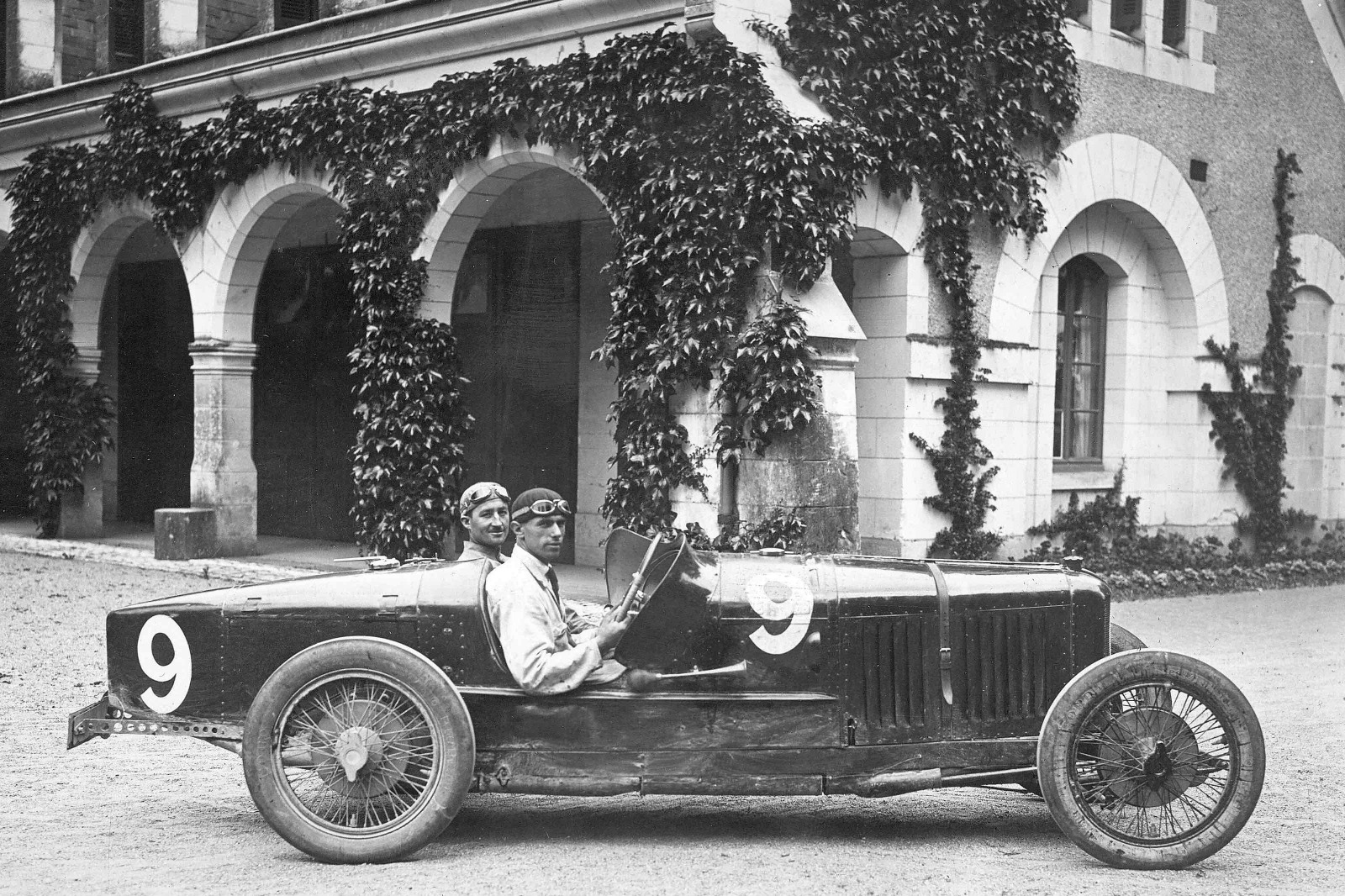
Enrico Giaccone in the fast but fragile Fiat 805 at the 1923 French GP
Photo by: GPL
That left the race in the hands of Sunbeam, Henry Segrave leading Albert Divo in a 1-2 after the Frenchman was delayed by a recalcitrant fuel-filler cap. Segrave’s victory was the first for both a British driver and a British car in a proper GP, although it also underlined the impact of the Fiat 804.
The 1923 Sunbeam was regarded by many as a green copy of the successful 1922 Fiat and, like that car, used an unblown six-cylinder engine and compact body. Only the Sunbeams were lighter than the 1923 Fiats, which weighed in at around 700kg. It was not as fast as Fiat’s latest creation but had been more reliable at Tours…
An interesting note is that Segrave’s Michelin tyres did not require changing over the 500-mile, near-seven-hour contest.
Following modifications to its supercharged engines, Fiat returned to the fray for September’s Italian GP, which was also the first race to carry the ‘European GP’ title. Unlike the French GP, which was an ‘invitation’ race and effectively excluded German teams (memories of the First World War were still fresh), the Italian GP was open. Sunbeam skipped the event, although would unlikely have had an answer to the rapid 805s at the head of the 14-strong field.
The car that gave the biggest hint of the future was the Benz Tropfenwagen. As well as providing another attempt at slipstreaming, it was mid-engined and had all-independent suspension, both groundbreaking for the time
As in France, Bordino led at Monza, setting a stunning early pace, even lapping all the non-Fiats. He did this despite competing with a broken arm from a previous accident, which eventually forced him to retire after the tread came off a rear tyre and he had to wrestle the car. He had even relied on his riding mechanic to change gear!
But the other two Fiats did finish the race, Salamano overtaking veteran Felice Nazzaro (whose engine was overheating) in the closing stages for a 1-2 at an average speed of 91mph. “All efforts to catch the Fiats were fruitless,” reported Autocar.
Third and the only other car to finish on the lead lap was the exquisite Miller 122 of Jimmy Murphy, the Josef Newgarden of his era. The 122 had dominated the Indianapolis 500 – also run to two-litre regulations – and is sometimes cited as the first single-seater racing car, though riding mechanics would not be banished from GP racing until 1925, so the Monza versions were two-seaters.
Murphy, winner of the 1921 French GP for Duesenberg and the 1922 Indy 500, had battled Nazzaro (then 41 years old) despite having been lapped. The 28-year-old comfortably topped the unsupercharged runners. From an American point of view, the Miller was the car of 1923 and was the first in a long line of superb and very successful Indycars.
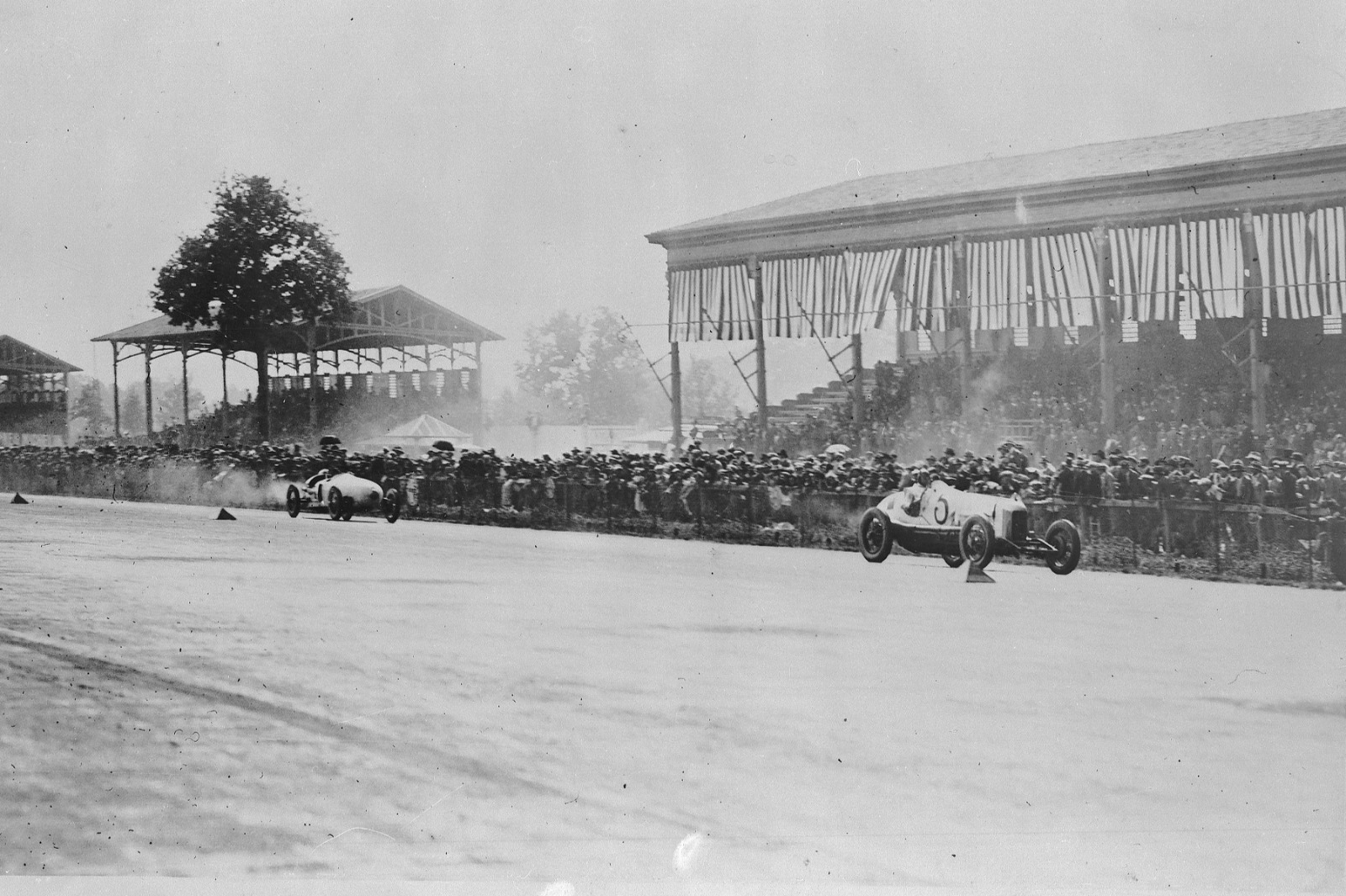
Jimmie Murphy in the Miller 122 couldn't match the Fiats at Monza but still put up a mighty fight
Photo by: GPL
Another milestone of 1923, though it did not appear very promising at the time, was the arrival of Alfa Romeo in grand prix racing. Three P1s were entered for the Italian GP, but Ugo Sivocci’s fatal crash in practice led to the team’s withdrawal.
Although the P1 would never race, Vittorio Jano was attracted from Fiat during 1923 and Alfa’s new chief engineer produced the P2 for 1924. It would become the benchmark in GP racing and Jano a design legend.
While the Fiat, Miller and Sunbeam’s ‘green Fiat’ were the successful cars of 1923, there was plenty of technical innovation and variety elsewhere. Designers and engineers were still a long way from finding the ideal layout for a racing car, and the era of optimisation was more than a generation ahead.
The Bugatti Type 32 ‘Tank’ had an unusual aerodynamic body in an early attempt at streamlining, while the unusual Voisin Laboratoire had a semi-monocoque chassis, four decades before Colin Chapman would make the concept stick with the Lotus 25.
PLUS: Formula 1’s great Lotus landmarks – the 25
Sadly, the Voisin was underpowered and failed to make an impact despite good handling, one finishing a distant fifth in the French GP. The Bugatti’s shape was more aeroplane wing-like than ideal and was tricky to drive, though Ernest Friderich did last the Tours race to take a fortunate third. Nevertheless, The Motor reckoned “there is distinctly something to be gained by the adoption of this peculiar-looking coachwork” in its French GP report.
But the car that gave the biggest hint of the future was the Benz Tropfenwagen. As well as providing another attempt at slipstreaming, it was mid-engined and had all-independent suspension, both groundbreaking for the time.
The Benz could not appear at the French GP, but three did make it to Monza. They performed admirably, Ferdinando Minoia finishing fourth, but the car’s power disadvantage – it was reckoned to produce just 70-75% of the Fiat’s output – was too great an obstacle to overcome.
Aside from some minor successes, the Tropfenwagen didn’t fulfil its potential and the concept wasn’t developed, but it is likely that the car made a big impression on Ferdinand Porsche, father of the famous mid-engined Auto Unions of the 1930s.
GP racing’s full-time switch to having the engine behind the driver was still more than three decades away, however. The biggest immediate change brought about by 1923 was supercharging and most of the major players, aside from Bugatti and Delage, had ‘blown’ engines the following season.
The 1924 French GP would feature the arrival of two of the great GP cars: the Alfa Romeo P2 and Bugatti Type 35. That’s rightly regarded as a key moment in motorsport history but wouldn’t have been possible without the 1923 season – and the fine Fiat 805 – that shouldn’t be overlooked.

Bugatti's Type 32 ‘Tank’ caught the eye but didn't find immediate success
Photo by: GPL
Other motorsport moments of 1923
The Le Mans 24 Hours was held for the first time. ‘Sportscar racing’ wasn’t yet a distinct category, but the French event would help form this new branch. Although there was no official victor at that stage, the Chenard et Walcker of Rene Leonard/Andre Lagache covered the furthest distance, and a remarkable 30 of the 33 starters were classified as finishers.
Spain’s first ‘permanent’ race track, Sitges near Barcelona, was built and hosted the Spanish GP. Albert Divo won on the oval-like circuit driving a Sunbeam, but the track was not deemed a success and quickly fell into disuse.
Enzo Ferrari, yet to found his legendary marque, won the Formula Libre race at Ravenna in June driving an Alfa Romeo RLTF. Ugo Sivocci had won April’s Targa Florio in a similar car, but he would be killed in practice for the Italian GP.
Enrico Giaccone was another Italian to lose his life during the season. The 33-year-old was killed at Monza in a testing accident while a passenger with Pietro Bordino when the squad’s drivers were taking it in turns to be riding mechanic. Bordino survived, but perished in a crash when a dog ran onto the road and was hit by his Bugatti at Alessandria in 1928.
Future racing legend Tazio Nuvolari led the race at the Garda circuit in Italy with a Chiribiri before retiring. The November contest was won by Guido Meregalli in a Diatto.
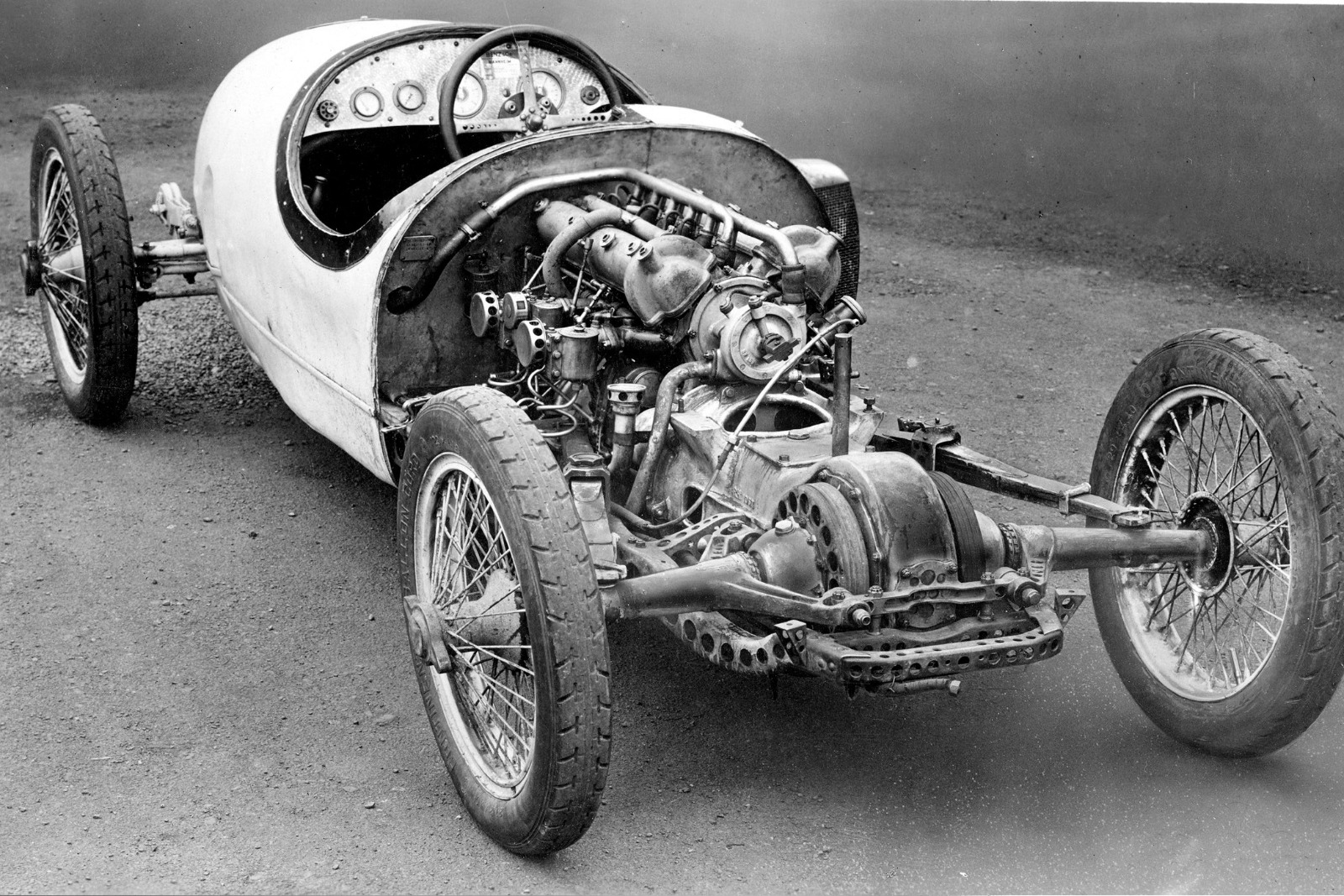
The mid-engined Benz Tropfenwagen signalled what was to come following 1923
Photo by: GPL


How the M8B became the most dominant car in McLaren’s history

Employing team orders can simply be a matter of common sense

The greatest F1 campaigns with no wins

Top 10 F1 results changed by backmarkers – the passes

Top 10 F1 results changed by backmarkers – the clashes

Stars, cars and highlights from the 2026 Goodwood Revival

The Egal has landed – again

Autosport magazine: Antonelli and a Can-Am celebration

FIA expects F1 races in Qatar and Abu Dhabi to run as planned

Top five roles on Motorsport Jobs this week

Champions crowned at incident-filled Donington Park 750 Motor Club meeting

Why Toyota’s 2026 WEC triumphs have put it into the all-time greatest endurance racing team debate
Subscribe and access Autosport.com with your ad-blocker.
From Formula 1 to MotoGP we report straight from the paddock because we love our sport, just like you. In order to keep delivering our expert journalism, our website uses advertising. Still, we want to give you the opportunity to enjoy an ad-free and tracker-free website and to continue using your adblocker.


Top Comments