


10 things we learned from F1 testing 2021
The condensed nature of F1's 2021 test schedule meant teams were under pressure to hit the ground running in Bahrain. While some delivered, others were left scratching their heads. Here are our key impressions
With just three days to bed in new drivers and collate data from the changes resulting from the trimmed-back 2021 aerodynamic rules, there was plenty riding on Formula 1's pre-season test in Bahrain.
It threw up a fair share of surprises too, with Mercedes appearing on the back foot, Ferrari showing signs of remedying its power unit woes and an unwelcome intrusion from the usually reliable weather.
As ever, there are several caveats that come with testing times due to the uncertain nature of fuel levels. But as preparations intensify for the looming 2021 season opener, some rough outlines can be detected.
Here's what our team of experts learned.
1. Red Bull 'wins' testing...
Alex Kalinauckas, Grand Prix Editor

Max Verstappen, Red Bull Racing RB16B
Photo by: Motorsport Images
What a difference a year makes. Heading into the first race of the new campaign, although hopefully there won’t be an unforeseen fourth-month gap to come this time around, F1’s two best teams are split along intriguingly similar lines. One topped the times and looked in full control overall, while the other had handling issues that meant its aces were regularly off the road and its actual pace position is unclear.
But where these teams were Mercedes/Red Bull in 2020, in 2021 its Red Bull/Mercedes…
Red Bull has kept the momentum it gained from winning last time out in Abu Dhabi by topping the times over the three days of 2021 testing. Max Verstappen’s 1m28.960s was 0.093s clear of Yuki Tsunoda in second place for AlphaTauri, but 1.065s ahead of Lewis Hamilton’s Mercedes benchmark. And Red Bull had a tyre advantage here, with Verstappen’s best time in a thrilling mock qualifying shootout on Sunday being set on the harder C4s to Hamilton’s C5s.
PLUS: How Red Bull won F1 2021 winter testing
Red Bull also appeared to lead the way in the long run efforts, to the point where Mercedes trackside engineering director Andrew Shovlin said “on race pace, we're not as quick as Red Bull”.
But it’s the turnaround in handling that really separates the two leading teams. Where the Mercedes was regularly off the road over the course of last weekend’s test, the Red Bull looked planted throughout – other than Verstappen’s half-spin on the opening morning. The team put this down to a gust of wind, not unusual in Bahrain, and so it appears for now as if it has left the RB16’s recalcitrant nature behind with the 2021’s B evolution.
2. ... But Mercedes' problems can't cost it 'favourite' tag just yet
Alex Kalinauckas

Valtteri Bottas, Mercedes W12
Photo by: Zak Mauger / Motorsport Images
Mercedes’ big problem isn’t its lack of pace on paper – times remain completely meaningless in testing given the heap of caveats to consider every year. It’s that Hamilton and Valtteri Bottas looked so uncomfortable at the wheel over the last three days. Things did seem to be improving on this front during the course of Bottas’s final half-day in the car in Sunday’s opening session, but then came Hamilton’s dramatic spin as he launched into a late flyer on the C5s.
Bottas did have two offs on Sunday, twice understeering wide at the Turn 13 left-hander during his long-run data gathering efforts, but it was the rear end issues that appeared to be particularly alarming. Hamilton said on day two that the W12’s “rear doesn't feel particularly great with this new regulation change” and there is a theory that the 2021 floor rule changes have impacted cars running a lower rake concept more than those with the reverse.
But Mercedes’ staggering run of recent F1 success offers it a significant degree of protection when it comes to form predictions. Regularly after FP2 sessions in 2020, the world champion squad declared itself unhappy or behind Red Bull, only to then blitz to pole and victory following overnight data analysis. For this reason alone, Mercedes must surely keep the 2021 ‘favourite’ tag despite Red Bull’s fine testing display.
It could all be down to fuel levels or engine modes, but the cliched “wait for qualifying at round one” really must be considered before Mercedes’ downfall is declared.
3. Ferrari thinks it’s put its power problems in the past
Luke Smith, F1 Reporter
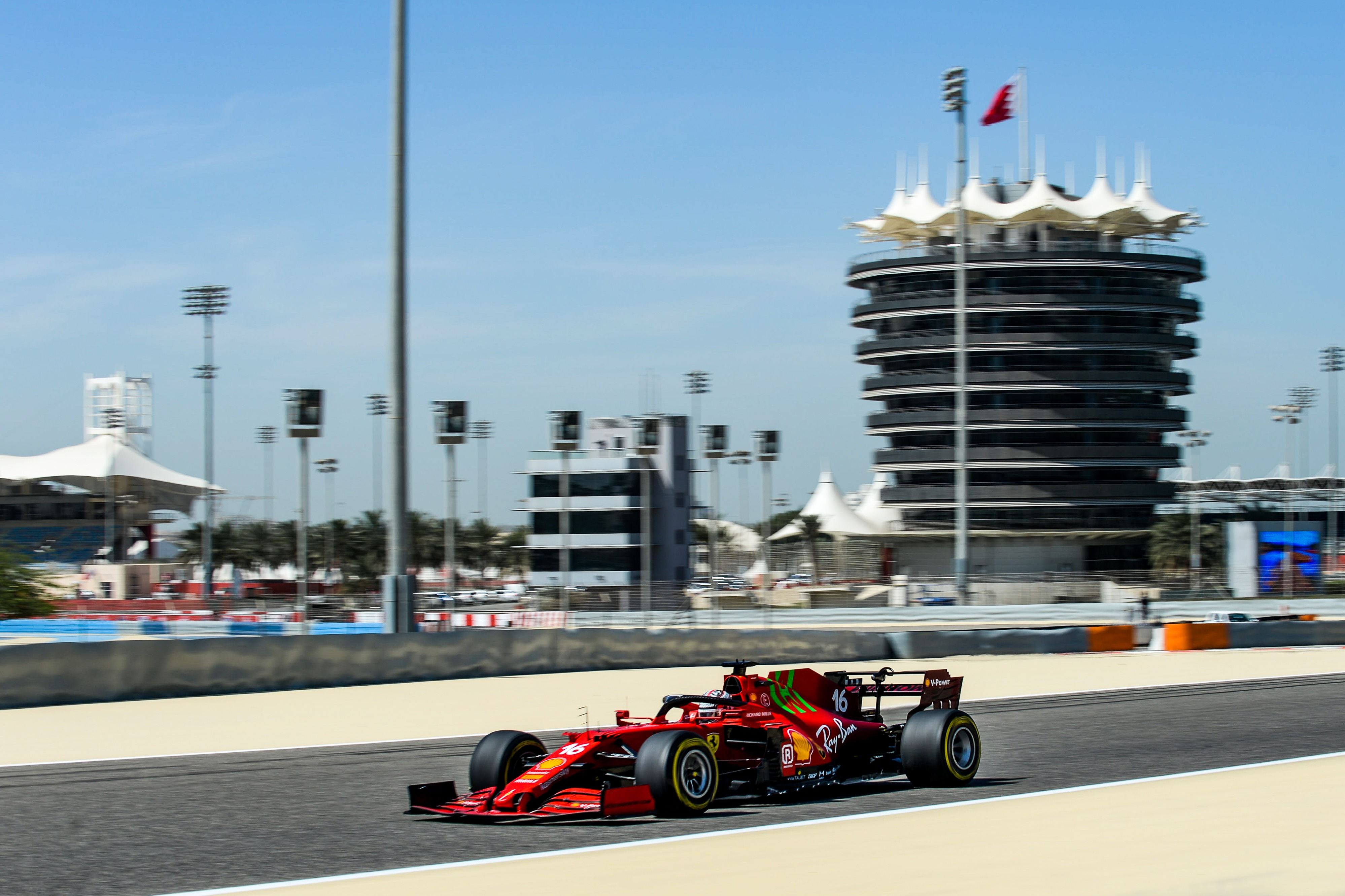
Charles Leclerc, Ferrari 2021 Bahrain F1 test
Photo by: Ferrari
After a disastrous 2020 marred by its underperforming engine – a consequence of its private settlement with the FIA over its 2019 design – and the draggy SF1000, one of the big pre-testing questions in 2021 concerned Ferrari’s chance of a comeback.
Team principal Mattia Binotto had said that the data from the new power unit’s running on the dyno at Maranello showed that Ferrari had recovered “quite a lot” of speed on the straights, but he wanted to reserve judgement until it was used on-track for the first time.
PLUS: How Ferrari plans to recover from its 2020 F1 nightmare
The feedback was encouraging. Charles Leclerc said the car was showing “promising signs”, while Binotto even went as far as saying that straight-line speed was “not a disadvantage any more” for Ferrari, according to the data.
The speed trap figures seem to tally up. Ferrari’s top speed in qualifying for the Bahrain GP was 321.9km/h. Leclerc hit 325km/h on the opening day alone, and finished second in the speed trap on day three – only trailing the Honda-powered Tsunoda. Work to resolve the SF1000’s unstable rear end has also been a success on the SF21, with Leclerc saying it was all correlating as expected.
But Ferrari still lacked the totally convincing display it so frequently used to trot out in pre-season testing. It has unquestionably made progress, but the real buzz around the midfield teams on Sunday evening lay largely with McLaren and AlphaTauri. Ferrari’s rivals have not been standing still over the winter.
The Scuderia can certainly take positives from its Bahrain running. A lack of straight-line speed seems to no longer be the huge Achilles’ heel it was in 2020. And while that is no guarantee of a return to the front of the midfield, it at least offers Ferrari a solid footing from where it can fight this year - and offer some hope of success.
4. McLaren-Mercedes reunites successfully, with added innovation from Woking
Jake Boxall-Legge, Technical Editor

Daniel Ricciardo, McLaren MCL35M
Photo by: Zak Mauger / Motorsport Images
After six years of dalliances and seeing other people, McLaren and Mercedes are back together. They just fit together, like F1's Bonnie and Clyde, or Thelma and Louise. Or Laverne and Shirley.
You'd forgive McLaren for enduring a few teething problems during the Bahrain test, as switching to a new powertrain supplier and adapting a car to fit its product is hardly the work of a moment. Yet, it all seemed like plain sailing as the MCL35M showed no signs of being out of sync with the Mercedes powerplant.
McLaren was only eighth overall in the lap charts, logging 327 throughout the three days, but technical director James Key attributed that to swapping drivers midway through on all three days, rather than the result of any mechanical malfeasance. It seemed to just get on with the task at hand, while also getting new charge Daniel Ricciardo up to speed in an unfamiliar car.
Ricciardo looked impressive, even though time-chasing is rarely the name of the game in testing. Regardless, he led the way in the opening two morning sessions, while Lando Norris looked equally comfortable ahead of his third year with the team. An air of quiet confidence currently seems to envelop the McLaren fraternity.
PLUS: Why McLaren can be a true force in F1 again
The team was also responsible for one of the more high-profile tech finds of the off-season, having found a workaround to the new diffuser restrictions. The FIA had made the decision to trim the fences within the diffuser by 50mm – to reduce its overall effectiveness – pairing that with the mandated floor size reduction to inhibit downforce.
McLaren, however, found a way to embed the fences in the central part of the diffuser, dropping below the 50mm cut-off to find extra performance. It seems that by shallowing out the centre part of the diffuser, McLaren has found a space to fit those added fences in. The area that the fence height applies to is from 250mm either side of the centreline of the car, and so it seems that the design is very much legal – and the other teams have reached that consensus too.
The team looks set for another close fight among the upper echelons of the midfield pack - but if it can deliver on the promise it showed in testing, it might enjoy another successful season at its head.
5. Tsunoda looks like the real deal ahead of his F1 debut
Haydn Cobb, Autosport.com Editor
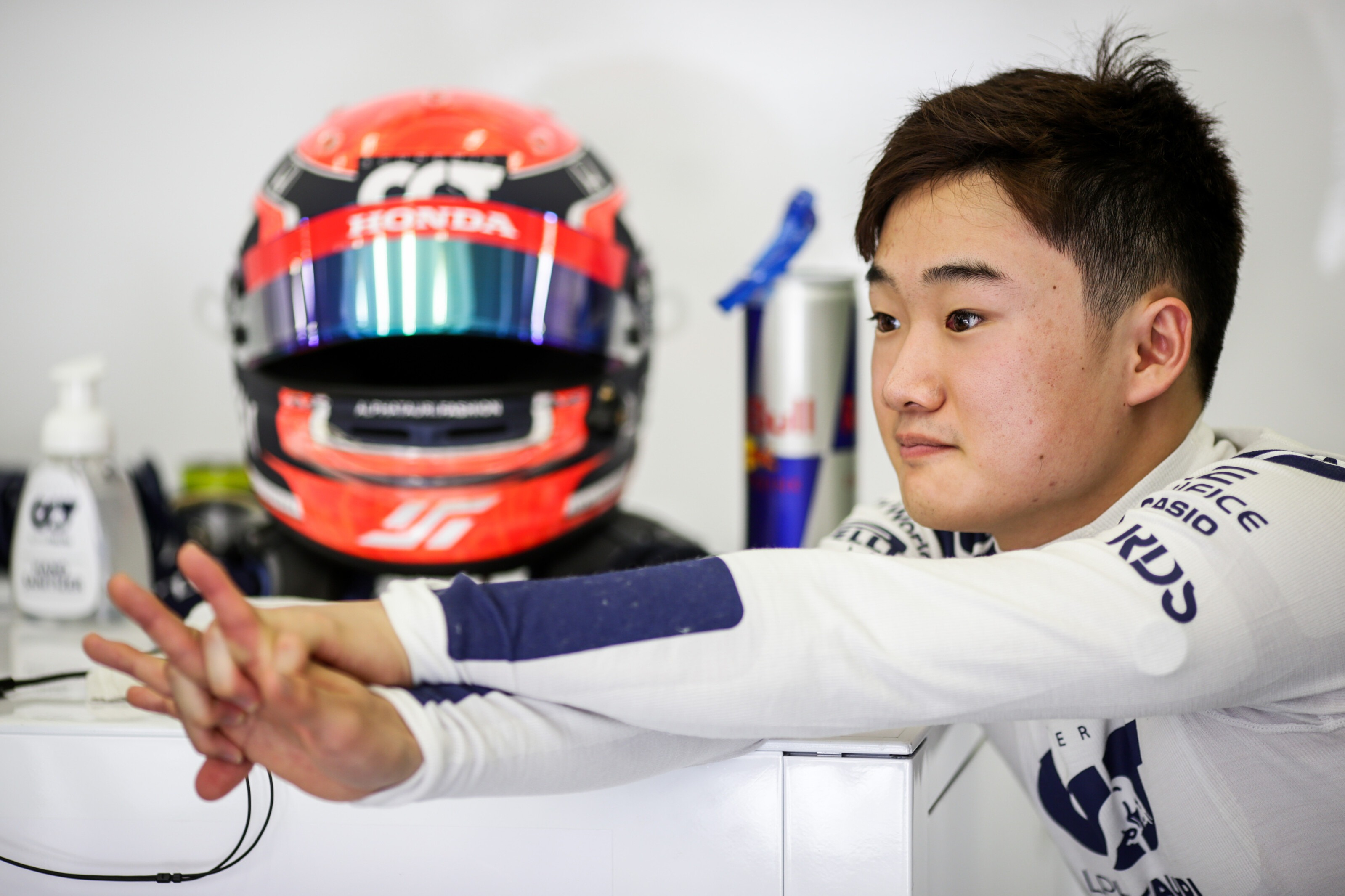
Yuki Tsunoda, AlphaTauri Bahrain F1 test 2021
Photo by: Peter Fox/Getty Images
Given the high interest – for right and wrong reasons – in Mick Schumacher and Nikita Mazepin over the winter, Formula 1’s other rookie went somewhat under the radar. That was until Yuki Tsunoda was trading fastest lap times with Verstappen in the closing hour of pre-season testing.
The Japanese driver’s rapid rise up the junior categories, going from the Japanese F4 championship to F1 in three years, demonstrated the 20-year-old’s ability as a quick learner, which is something AlphaTauri has aided with private running in its older-spec F1 cars. There was extra importance behind this early track time due to 2021’s overall testing restrictions, which means this year’s rookies face a very steep learning curve.
PLUS: The meteoric rise of F1's first 21st century-born racer
To his credit, Tsunoda notched up 185 laps across the test in his one-and-a-half days at the wheel for AlphaTauri and he initially quietly went about his business adapting to the AT02.
But Tsunoda put himself in the spotlight with his qualifying simulations late on the final day and he briefly looked set to steal the headlines and clinch the fastest lap overall time, albeit aided by running on the softest compound – the C5s. While Verstappen ultimately toppled Tsunoda by less than one tenth, it completed a very promising test for the AlphaTauri driver.
While Schumacher and Mazepin are expected to fight at the back of the grid this year, due to a lack of upgrades as Haas focuses on 2022, Tsunoda should come out as 2021’s top rookie. But how he matches up against team-mate Pierre Gasly, a grand prix winner let’s not forget, will be fascinating.
If Tsunoda can fulfil his growing potential and pose a challenge to Gasly, it would also restore some credit to the Red Bull junior programme after a rocky run post-Verstappen’s own rapid climb up the ranks.
6. Aston Martin and Vettel are seriously behind
Jonathan Noble, Motorsport.com F1 Editor

Sebastian Vettel, Aston Martin
Photo by: Glenn Dunbar / Motorsport Images
While the final timesheets ranking ultimately matters little in F1 testing, it’s a completely different matter when it comes to mileage. Getting as much distance in before the first race of the season is the main aim for any team and it’s something that Sebastian Vettel and Aston Martin fell well short of over the three days in Bahrain.
A gearbox problem on day two, and then a suspected turbo problem on the final day, drastically limited Vettel’s running in the very week when he needed as much time as possible to adapt to his new surroundings. The difficulties left Aston second from the bottom in mileage terms – with 314 laps, compared to the majority of teams finishing well into the high 300s and beyond.
Vettel confessed that he left the test about 100 laps short of where he would’ve like to have been, and that will make the start of the season trickier. But while such a scenario may be daunting for many drivers, Vettel has seen it all in F1 before and knows there is little benefit from ruing how things could’ve gone better.
“Maybe it's the age, maybe it's the experience, but probably 10 years ago I would finally panic now,” he said at the end of testing on Sunday. “But then again, if I were to panic now would it help? Probably not.”
For now then, Vettel is calm. He’s prepared for it to take more time to get going and he’s bracing himself for a tricky start to 2021, as he gets himself and his new team working together in perfect harmony.
7. F1 2021 is not going to be slower despite the downforce cuts
Jonathan Noble

Esteban Ocon, Alpine A521, Yuki Tsunoda, AlphaTauri AT02
Photo by: Mark Sutton / Motorsport Images
There was much speculation over the winter about the teams likely struggling to make up for the downforce losses forced upon the cars by regulation changes for 2021. The new floor requirements, allied to tweaks to the rear brake duct and diffuser rules, were all aimed at cutting downforce by around 10%.
Mercedes’ technical director, James Allison, had suggested in the weeks before the W12’s launch that F1 would be going back to downforce levels last seen in 2019 and that cars could be several seconds off the pace. But F1 teams are full of brilliant engineering brains, and progress to recoup the missing performance has been relentless.
Yet, despite Pirelli’s 2021 rubber being around one second per lap slower thanks to its heavier and tough compounds, it was quite a big surprise in testing to see cars lap Bahrain just as fast as they did, which suggested that they will actually end up not being any slower at all this year.
Indeed, Verstappen’s test-topping 1m28.960s would have been good enough for 11th on the grid in last November’s Bahrain GP. But if you take into account that in testing teams generally run more fuel and are unlikely to be going as completely flatout as they will be in Q3 in a fortnight, you can be sure that the cars will be even quicker once they are unleashed in full anger for the first time at the opening race.
For Pirelli, which had pushed hard for the downforce-cutting rule changes to help reduce the high forces being exerted on the tyres, the expectation now is that F1’s 2021 cars will be no slower than last year.
“The difference compared to last year is very, very, very small,” said Pirelli’s F1 racing chief Mario Isola. “If we consider that probably the track was not in a perfect condition, plus the reduction in downforce, and considering fuel-corrected lap times, I believe that we are not going to see a delta lap time or a difference in reduced performance compared to last year.”
8. Teams have taken alternative approaches to new floor rules
Jake Boxall-Legge

Mercedes F1 W12 floor detail
Photo by: Giorgio Piola
As the FIA mandated a cut in floor sizes for 2021, creating a triangular exclusion zone ahead of the rear wheels to force a taper into the edge of the floor, the teams all had to don their thinking caps to overcome the tools they had lost when it came to maximising the floor's performance.
Mercedes and Red Bull took great pains to hide their brand-new floors at their respective launches; neither team was willing to unveil these areas and potentially hand its rivals a chance to develop their own adaptation. Nonetheless, there’s nowhere to hide come testing – to a certain degree at least – and Mercedes eventually had to reveal its scalloped floor to the public’s gaze.
Teams have been using scrolls in this area for years, helping to add a little extra downforce by increasing the possibility for airflow to expand underneath the car, particularly when the car is in yaw during cornering. The division of the scroll into five distinct areas raises the question of why Mercedes has created the ripples in the design.
One theory is that, much in the same way that a diffuser uses internal fences to ensure that it remains more effective by reducing the chance for airflow to mix and create turbulence, breaking the scroll into smaller versions also produces this effect.
The Mercedes approach also features a square cut-off before the floor tapers in, which should introduce a tip vortex that can help to seal the floor – an addition that numerous teams have pursued. The bank of fins at the rear of the W12’s floor suggests that pursuing the outwash path is still in vogue to extricate dirty airflow away from the zone between the diffuser, ensuring that the two fins further back towards the diffuser can attempt to place air between the diffuser and rear tyre and help to close it off in that manner.
Red Bull’s floor was updated numerous times throughout the three days at Bahrain, eventually reaching a point where the car had a big collection of fins on the deck. The scroll is much less pronounced compared to Mercedes’ design, but features a wealth of fins diverting airflow over the winglets alongside the floor’s edge.
These are paired with a much larger fin before the taper, which features a slight overhang that may help again to provide the floor with a vortex that can provide the opportunity to seal.
9. Alonso made a smooth return in the eye-catching Alpine
Luke Smith
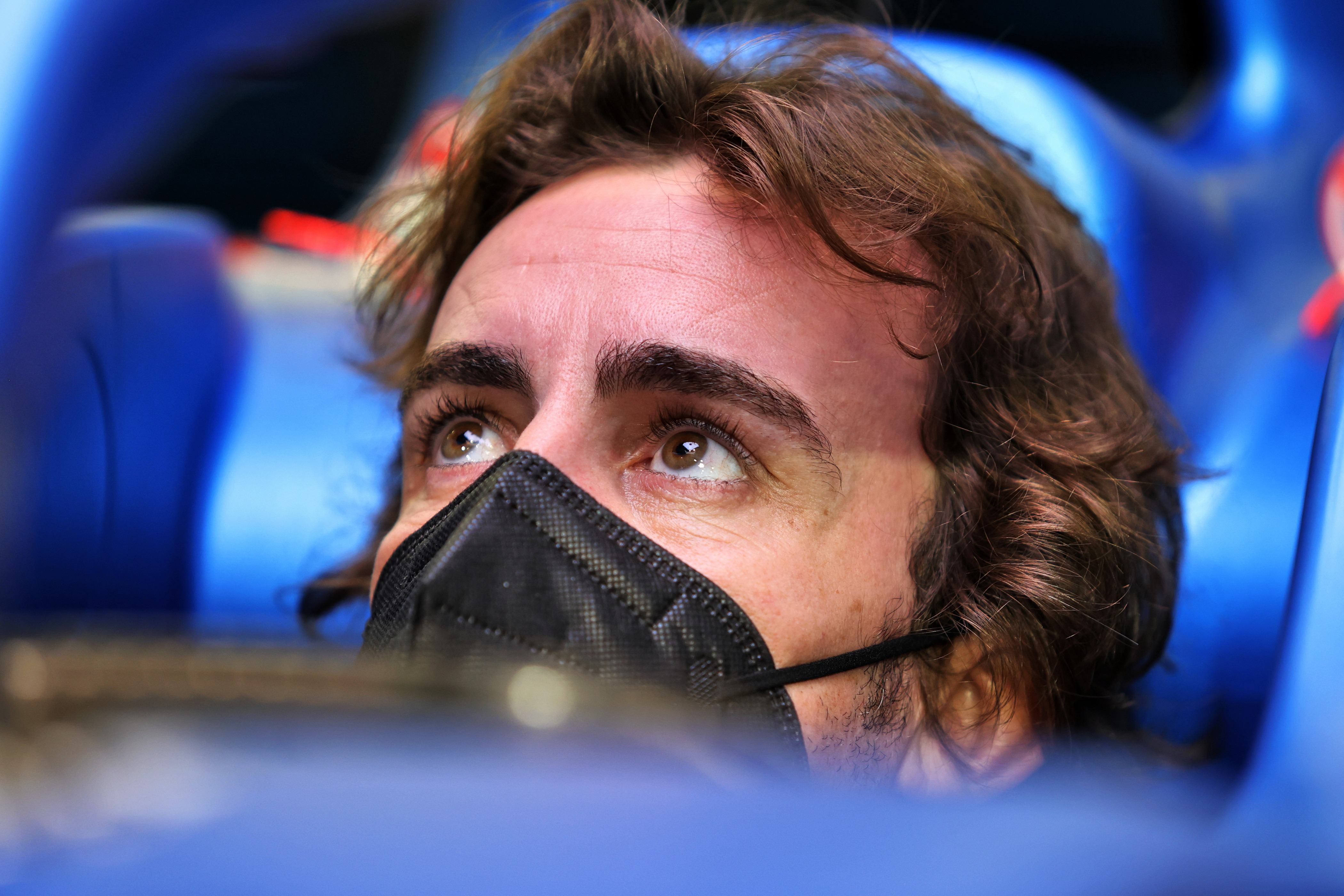
Fernando Alonso, Alpine, Bahrain F1 test 2021
Photo by: Alpine F1 Team
It took just a couple of hours for Fernando Alonso to show he’d lost little of his former edge during his two years away from F1 upon returning to public action in Bahrain last week.
Following a winter preparation disrupted by a cycling accident that left him with a fractured upper jaw - which requires further surgery after the 2021 season - Alonso got back into the groove really quickly with the rebranded Alpine squad on Saturday. He posted the second-fastest time of his first morning in the A521 before focusing on long runs, racking up a mammoth 128 laps to fall just one shy of Esteban Ocon’s total from the previous day.
PLUS: What we learned from the first full race simulations of 2021 F1 testing
Mileage was really Alpine’s narrative throughout testing. It didn’t set any headline times on the final day - Alonso ended up 10th overall - but clocked 396 laps, just 26 short of AlphaTauri and Alfa Romeo’s joint-best total.
The team caught attention for its bulbous 2021 airbox design, prompting executive director Marcin Budkowski to call out the F1 paddock for “body shaming”. He explained how the team believes there are performance gains to be found by repackaging certain items up near the airbox, allowing for a slimmer sidepod design further down.
After a winter of so much change at its Enstone base, for Alpine to get through testing without any major issues was a positive step. Lots of figures are settling into new roles and the team is getting used to a new identity, yet unlike other teams in similar positions, it didn’t seem to miss a beat.
And, encouragingly, Alonso hasn’t lost any of his old swagger. He proclaimed he had been “at my best” during his two years away from F1 and was even seen on Sunday getting a bit feisty with Hamilton during a race simulation. Hopefully, that was a taster of things to come this year.
10. There's no perfect F1 testing venue
Tom Howard, News Editor

Nikita Mazepin, Haas VF-21
Photo by: Charles Coates / Motorsport Images
Heading to Bahrain seemed like a smart idea for 2021’s pre-season running. The strong likelihood of hot and dry weather allowing teams the best opportunity to put new machines through their paces and log valuable test mileage is desirable, and the Bahrain Grand Prix’s promotion to season opener thanks to the pandemic made major logistical sense.
But last weekend F1 was once again reminded there is never a perfect venue for testing, as high winds whipped up a sandstorm that hit the Bahrain track on the opening day.
A layer of sand blew onto the track surface and reduced grip for the drivers, confusing the data being gathered by the teams. Luckily, the sandstorm abated for the rest of the test but the gusty winds were still evident on Saturday, catching several drivers out. Hamilton appeared the most high-profile victim, as a gust seemed to assist the seven-time champion into a red flag-inducing spin on the second morning.
On the whole though, Bahrain did give the teams ample opportunity to complete their 2021 test programmes. A total of 3,725 laps (12,523 miles) were completed, with AlphaTauri and Alfa Romeo jointly logging the most over the three days, each completing 422 laps (2,283kms).
The Sakhir circuit may not pose the same rigorous chassis-testing characteristics of Barcelona, but its wide nature and huge asphalt run offs allow drivers to recover from mistakes, limiting incident related red flag stoppages to only three over the whole test.
And, let’s not forget that in 2018 freezing temperatures and snow at Barcelona played havoc with the test programme. Surely F1 would take high winds and a sandstorm over that…

Esteban Ocon, Alpine A521
Photo by: Sam Bloxham / Motorsport Images

Top five roles on Motorsport Jobs this week

What we’ve learned at the 2026 Le Mans 24 Hours so far

LIVE: F1 Italian GP updates - Gasly takes shock pole for Alpine

LIVE: F1 Italian GP updates - Antonelli takes stunning victory from 19th on the grid

F1 Spanish GP: Russell tops first practice at new Madring

F1 Spanish GP live updates: Antonelli fastest in FP2 after Lindblad crash

F1 Spanish GP live commentary and updates - FP3 ends under a red flag

F1 Spanish GP live commentary and updates - Norris snatches pole

Ryder clinches third British Hillclimb title by a single point at Prescott

Factory WRC driver Lappi to pause rallying career

Why Leclerc didn’t copy Hamilton’s driving style amid F1 2026 struggle

Le Mans legend wins Goodwood’s RAC TT Celebration in low-drag Jaguar
Subscribe and access Autosport.com with your ad-blocker.
From Formula 1 to MotoGP we report straight from the paddock because we love our sport, just like you. In order to keep delivering our expert journalism, our website uses advertising. Still, we want to give you the opportunity to enjoy an ad-free and tracker-free website and to continue using your adblocker.


Top Comments